
- คัดสรรโดยคอร์ติน่า
Luxury Watch Complications That Transcend Timekeeping
25 ก.ย. 2025

Perpetual calendars, moon phases and tourbillons are hallmarks of luxury watchmaking, where technical excellence intersects with traditional craftsmanship.
Luxury watches and their remarkable complications, the likes of perpetual calendars, moon phases and tourbillons, continue to stand the test of time. They are more than a timekeeping instrument, for there is an exquisite human element that makes these watches extraordinary and transcendental. Luxury watches are a passion and objets d’art that stir emotion.
Complications That Make Luxury Watches Extraordinary

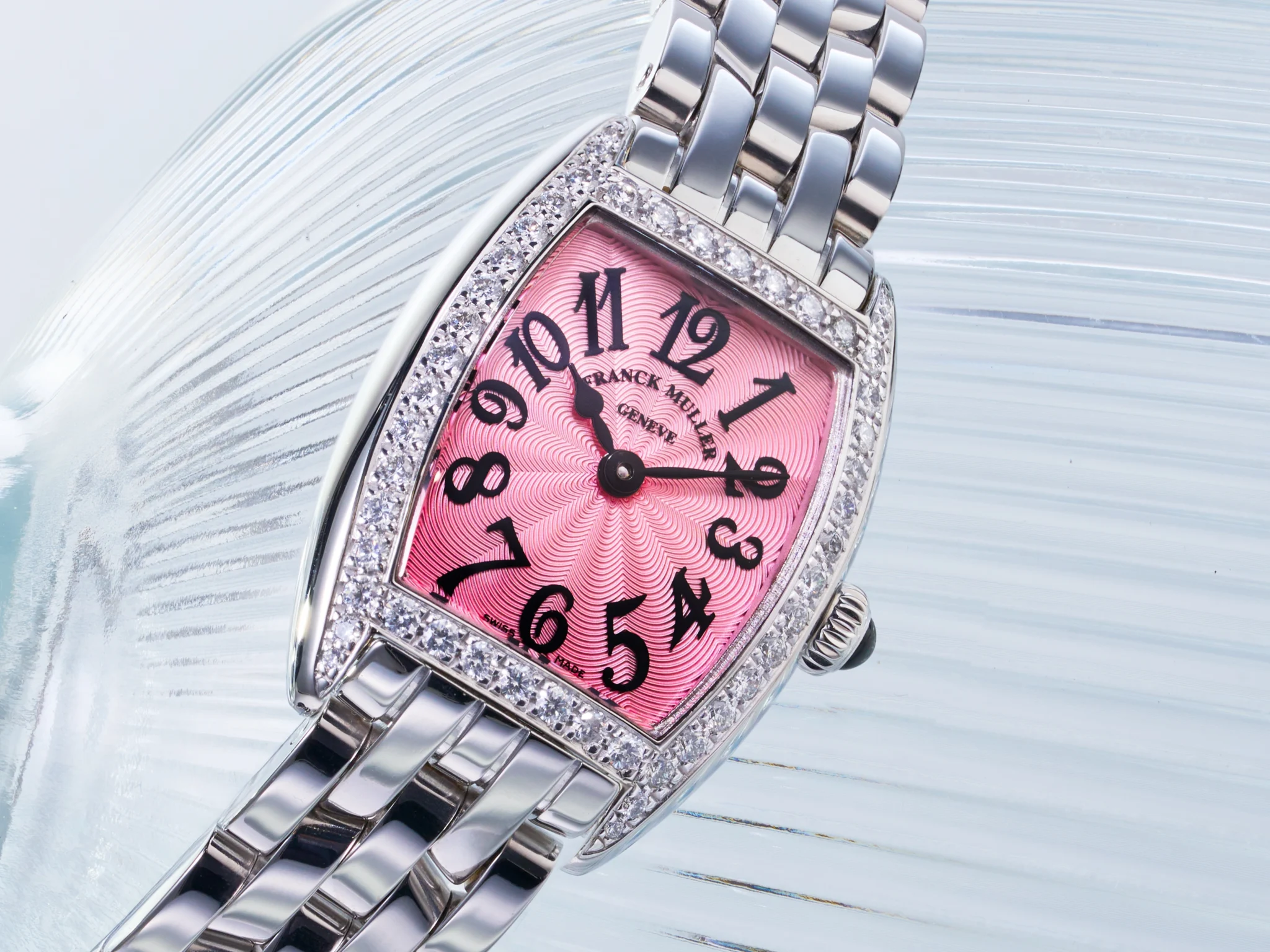
Luxury complicated watches feature extreme complexity, painstaking craftsmanship and flawless finishing. (Credit: Franck Muller)
In high watchmaking, functionality and craftsmanship go hand in hand. Luxury watches are both a labour of love and an engineering marvel. They are an extraordinary expression of artistic and technical excellence. To understand why luxury watches are seen as precious commodities by discerning collectors, one has to understand their intrinsic value, spanning functionality, complexity, heritage and desirability.
In watchmaking, functions beyond simple timekeeping of the hour, minute and second are known as complications. Notable complications range from the ubiquitous indicators such as dates, days and months to the more complex moon phases and perpetual calendars. Complicated luxury watches often combine several complications with artful interpretations and decorative techniques. More than a timekeeping instrument providing chronometric information, luxury watches are a medium showcasing watchmaking ingenuity. A finished product tells a story of which master watchmakers build upon centuries-old know-hows, metallurgists and alchemists push the boundaries of material sciences, and artisans dedicate their careers to perfecting their crafts. A watch epitomises the saying: the whole is greater than the sum of the parts.
The Perpetual Calendar: Mastering Time
Mechanical timekeeping represents a romantic notion in a way that can’t be replicated by electronic timekeeping. It is also a process of surgical precision. Like an orchestra where every musician must stay in sync with each other so that the concerto sounds flawless, every component in the movement must operate in concert so that the watch can keep excellent time. There is no room for error.
Extreme mathematical calculation takes place when conceptualising and designing a movement, right down to ascertaining the correct number of teeth required on each wheel. Amplifying this process to something as complex as the perpetual calendar, where the movement automatically and correctly tracks the dates, months and years including leap years without any user intervention or manual adjustment, until February 2100, one begins to appreciate the magnitude of this mechanism. Yet all this happens on a miniature scale where each component is not much larger than a grain of sand. The movement is like a tiny jigsaw, comprising several hundred components. It is also attended to by artisans who are tasked with the aesthetics side of the equation, ensuring the movement not only works perfectly, it has to look perfect.
The first portable perpetual calendar was created in the late 17th century, while the first wristwatch format surfaced in the early 20th century. Modern perpetual calendar watches often feature quick adjustment and fail safe mechanisms.

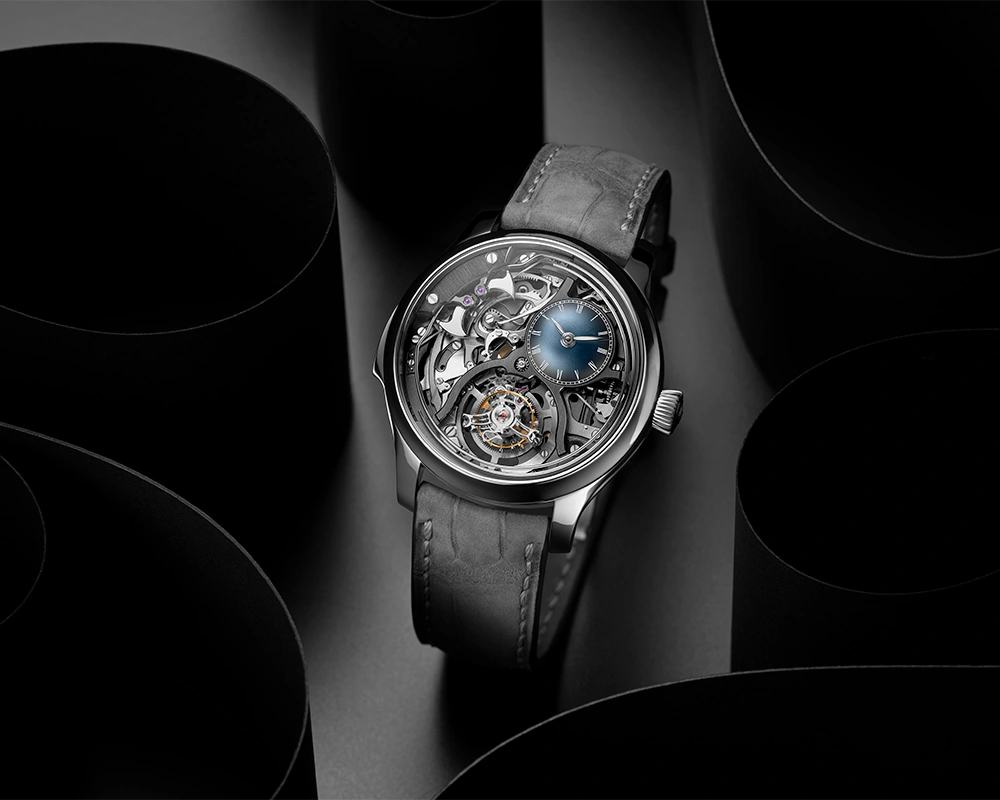
BOVET arrays the Récital 21 with an impressive five-day power delivered from a single barrel. (Credit: BOVET)
As one can imagine the scope of this undertaking, challenges abound. Watchmakers dream up unique solutions to overcome a range of issues, especially wear and tear, and consistency and precision. A perpetual calendar is intended to last. Therefore the watch is expected to withstand gravity, magnetism and friction that will cause degradation to the watch’s accuracy over time.
Furthermore, the intended design of the perpetual calendar can bear influence on the architecture of the movement. An open-worked dial requires intense skeletonisation. Indicators and apertures can also be moved around on the dial, which requires rearranging of the movement.
Combining an extraordinary complication with striking colours, an open display and a unique interpretation, the BOVET Récital 21 is a supreme exhibit of high watchmaking. The collection showcases a bold look with artistic flair through a daring design. Featuring a handcrafted manual-winding perpetual calendar movement, a retrograde date display, a vertical day and month aperture, and a selection of colourful transparent sapphire crystal dials available in green, blue and smoked, BOVET’s latest perpetual calendar forms the nexus between complex and contemporary.
The Moon Phase: Elegance in Motion

Blancpain’s moon phase is known for its user-friendliness thanks to an independent moon phase corrector located at 5 o’clock. (Credit: Blancpain)
The moon phase is poetry in motion. The complication’s elegant appearance often belies its function and symbolism. Moon phases are central to lunar calendars steep in many great civilisations and cultures.
Appearing before our eyes on a night sky, the moon goes through eight phases: new moon, waxing crescent, first quarter, waxing gibbous, full moon, waning gibbous, third quarter and waning crescent on a constant evolution. The lunar cycle influences tides and seasons. It repeats once a month, approximately every 29.5 days.
Therein lies the technical challenge for watchmakers: ensuring the moon phase stays correct for the years to come. While the approximation seems small at any month, over time, it adds up to a day in discrepancy. Therefore, an adjustment to the moon phase is needed to correct it. The ease of adjusting the moon phase is important to users.
Thanks to its emotive language, artisans relish the eclectic interpretations of the moon phase. Every watch brand has a unique take. The moon phase is usually articulated on a disc travelling gradually across a purpose-built aperture, accompanied by other celestial elements for decorative purposes. The moon itself can also take on a variety of forms and shapes, from reflective mirror polishing to enamelling and engraving.
Blancpain is synonymous with the moon phase. Offered in Fifty Fathoms and Villeret families of watches, the Phases de Lune is beloved for its emblematic moon phase, complete with a vivid man-like facial expression. On select models, ancestral craftsmanship is expertly demonstrated by grand feu enamel dials and serpentine hands for the calendar indicator, while exceptional watchmaking is evident in the under-lug correctors, secured calendar and generous power reserve.
The Tourbillon: Defying Gravity
A spellbinding complication revered for its ability to captivate, the tourbillon is a hallmark of Haute Horlogerie and perhaps watchmaking’s most stunning mechanism. Invented in the late 18th century as an anti-gratitational mechanism to neutralise the adverse effects of gravity on pocket watches, the tourbillon has remained a source of fascination for countless watchmakers seeking to demonstrate their watchmaking prowess. For collectors, it is a watchmaking spectacle.

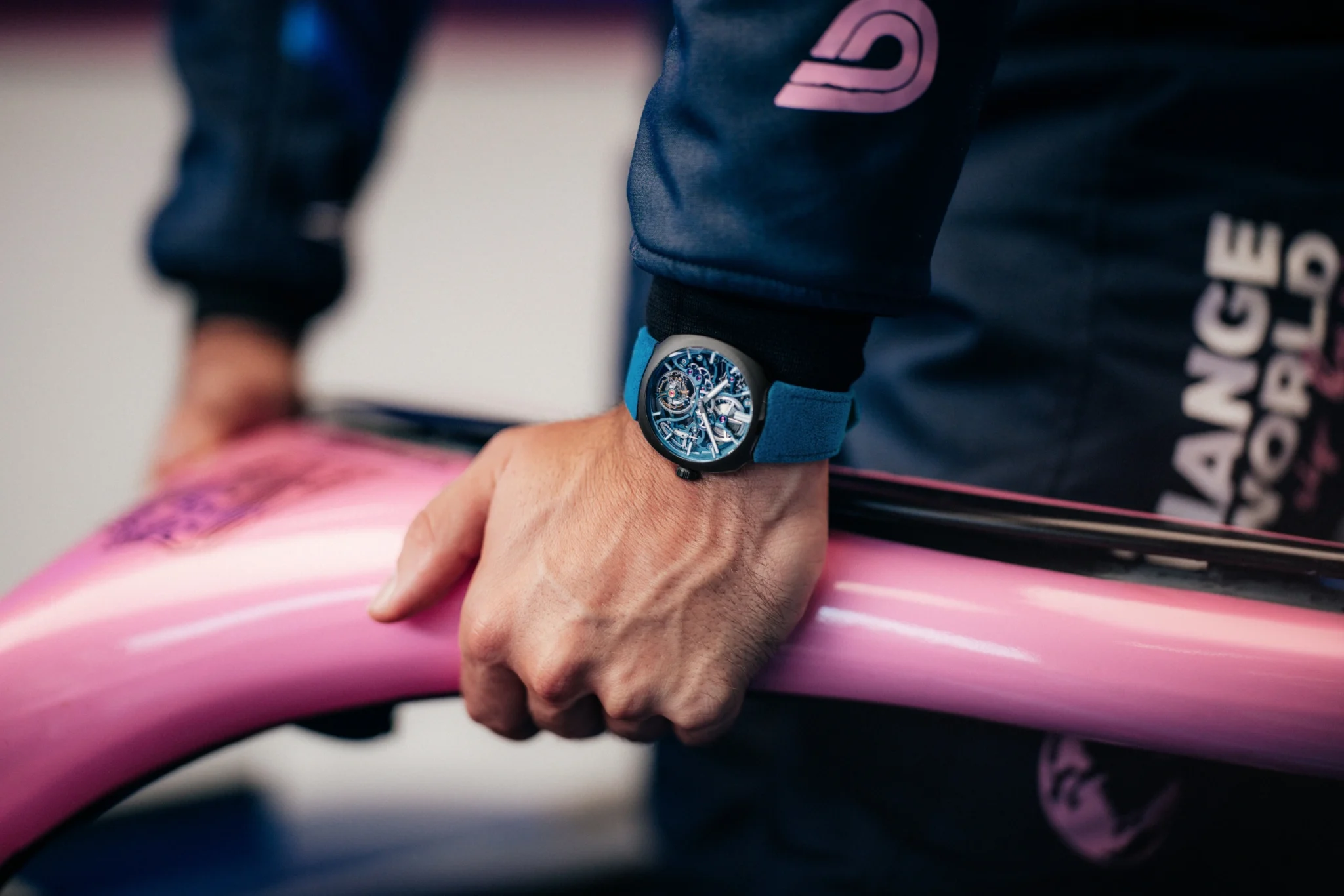
Franck Muller dares to pair an archetypal tourbillon with electrying colours on its Grand Central Tourbillon Flash collection. (Credit: Franck Muller)
On a standard movement, gravity pulls on the escapement, which controls the transfer of energy, leading to chronometric variations. The tourbillon addresses this issue by evening out the positional errors, by rotating the escapement and the balance wheel mounted on a cage at regular intervals, resulting in improved accuracy.
While the fundamentals of the complication remain the same, innovative watchmakers have elevated the application on each new generation of tourbillons, creating breathtaking genres such as the flying tourbillon and the multi-axis tourbillon. They connect timekeeping principles to modern aesthetics and traditional craftsmanship.
On the Grand Central Tourbillon, Franck Muller places the tourbillon centre stage. Watchmakers had to completely reconfigure the movement, shifting the tourbillon from the usual position at 6 o’clock to the middle while integrating the hour and minute hands around the complication. The collection showcases the brand’s versatility and daring, offering styles from guilloché dials to skeleton and futuristic watches in flashy colours.

OMEGA prefers a traditional execution on the small-scale De Ville Tourbillon production, handcrafted by the atelier’s horologists. (Credit: OMEGA)
On the other hand, the De Ville Tourbillon is OMEGA’s tribute to the tourbillon and the art of watchmaking. Housed in the brand’s signature precious alloys such as 18K Sedna and Canopus Gold, the watches are traditional in style but resolutely modern in quality, guaranteed by the Master Chronometer certification. The collection is a quintessential example of OMEGA’s reputation for precision and quality.
The Appeal of Complications in Modern Watchmaking
In a world moving at breakneck speed and expediency comes at a cost, mechanical luxury watches continue to uphold time-honoured tradition, perpetuate craftsmanship and embody technical mastery. Complications such as the perpetual calendar, the moon phase and the tourbillon are symbols of horological excellence. Their timelessness is simply sui generis and will endure the passage of time.
Cortina Watch is a leading luxury watch retailer and home to an expansive selection of complicated watches. Get in touch with us today to learn more about the timeless appeal of luxury watches and complications.
บทความที่เกี่ยวข้อง
ดูบทความทั้งหมด-

- ความรู้เกี่ยวกับนาฬิกา
The Latest Aviation-Inspired Watches to Rule the Skies
09 ก.ย. 2026
-

- แบรนด์ที่น่าสนใจ
Why Watch Size Matters (But Not the Way You Think)
09 ก.ย. 2026
-
- ข่าว
Streamliner Tourbillon Skeleton Ceramic Alpine Limited Edition: A New Chapter, A New Material
09 ก.ย. 2026
-

- ความรู้เกี่ยวกับนาฬิกา
Unveiling the Minute Repeater Watch
09 ก.ย. 2026
-

- แบรนด์ที่น่าสนใจ
Cartier’s Shift Towards Smaller Dials
08 ก.ย. 2026
-

- Cortina Curates
Cortina Curates Local: The Art of Stillness by Taiwanese Glass Artist Chen Chien-Chih
08 ก.ย. 2026