2025年9月16日
Ahead of the adrenaline-filled Formula 1 Singapore Grand Prix this October, we spotlight seven standout timepieces that channel the sport’s relentless pursuit of precision and speed through split-seconds chronographs, track-focused ergonomics and automotive-inspired craftsmanship.
As the Formula 1 Singapore Airlines Singapore Grand Prix 2025 returns for its 17th edition from 3 to 5 October 2025, we single out seven timepieces that channel the thrill of motorsports in different yet equally compelling ways. Some are purpose-built for the pit wall – think split-seconds chronographs and track-ready ergonomics – while others bring the romance of the road or the raw performance of high-frequency calibres to the wrist.
In this feature, you’ll find motorsport-driven instruments like TAG Heuer’s Monaco Split-Seconds Chronograph | F1, H. Moser & Cie.’s Streamliner Alpine duo and Bell & Ross’ BR-X5 Racing, heritage-rich rally style in Breitling’s Top Time Racing chronographs, and two kindred outliers that belong in any connoisseur’s collection – Jacob & Co.’s Bugatti Tourbillon, a hypercar engine reimagined as kinetic horology, and Zenith’s Chronomaster Sport Meteorite, whose El Primero movement needs no team livery to prove its racing pedigree. Whether you’re timing laps at Marina Bay or reliving them long after the chequered flag falls, these timepieces are set to bring the grid’s high-octane drama and electricity to your wrist.
Credit: TAG Heuer
You can’t talk about motorsport and watches without TAG Heuer – and its new Monaco Split-Seconds Chronograph | F1 makes the case in emphatic fashion. Motorsport has been the Swiss manufacture’s arena for over half a century. In 1969 – when the brand was still Heuer (it became TAG Heuer in 1985 when Techniques d’Avant Garde acquired a majority stake) – it became the first non-automotive brand and first watch brand to put its logo on a Formula 1 car. By 1971, it was the first watchmaker to sponsor an F1 team with Scuderia Ferrari. That momentum carried through decades of pit-lane innovation, including service as F1’s Official Timekeeper from 1992 to 2003 – a role the brand resumes this year, while also becoming title partner of the Formula 1 Grand Prix de Monaco.
Within that lineage sits the Monaco, born in 1969 as the first automatic, water-resistant square chronograph and immortalised by Steve McQueen in Le Mans. The new Split-Seconds model is also a hat tip to Heuer’s century-old split-timing pedigree – from the 1916 Mikrosplit stopwatch, which measured separate intervals to 1/100th second, to pit-lane rattrapantes used by Scuderia Ferrari and quartz split-seconds worn by Senna, Berger and Schumacher – bringing that DNA into a modern, hand-finished rattrapante built for today’s grid.
At its heart, the automatic Calibre TH81-00 is among TAG Heuer’s lightest yet most advanced chronograph calibres. The inherently intricate rattrapante architecture lets you time two intervals at once, beating at 5Hz with 65 hours of power reserve, or 55 hours with the chronograph running. Finishing is a highlight here: black mirror-polished screws, hand-finished bevels, a shield-shaped rotor with brushed surfaces and hand-painted kerb motif, plus chequered-flag bridge textures.
The 41mm square case is equally exacting, pairing precisely machined (not moulded) white ceramic surfaces – sandblasted, fine-brushed and polished – with a sculptural sapphire bezel and sapphire caseback for an uninterrupted view of the movement. A translucent, race-red dial completes the grid-ready aesthetic: asphalt-like counters with starting-grid flashes, official F1 typography and a tribute to British sports commentator David Croft’s iconic start call – “LIGHTS OUT & AWAY WE GO” – capturing the adrenaline surge of every Grand Prix launch. A discreet F1 logo at 6 o’clock further deepens the link.
Presented on a white calfskin strap with red hand-stitching, Grade 5 titanium folding clasp and 30-metre water resistance, the watch is built to wear as well as wow. Limited to just 10 individually numbered pieces, it’s pure Grand Prix drama distilled – for the wrist.
The independent Swiss manufacture took a radically different approach with its Alpine Motorsports collaboration, asking how a 200-year-old watchmaker could support Formula 1 teams’ quest for precision and performance. The result: two revolutionary timepieces that redefine motorsports horology.
Credit: H. Moser & Cie.
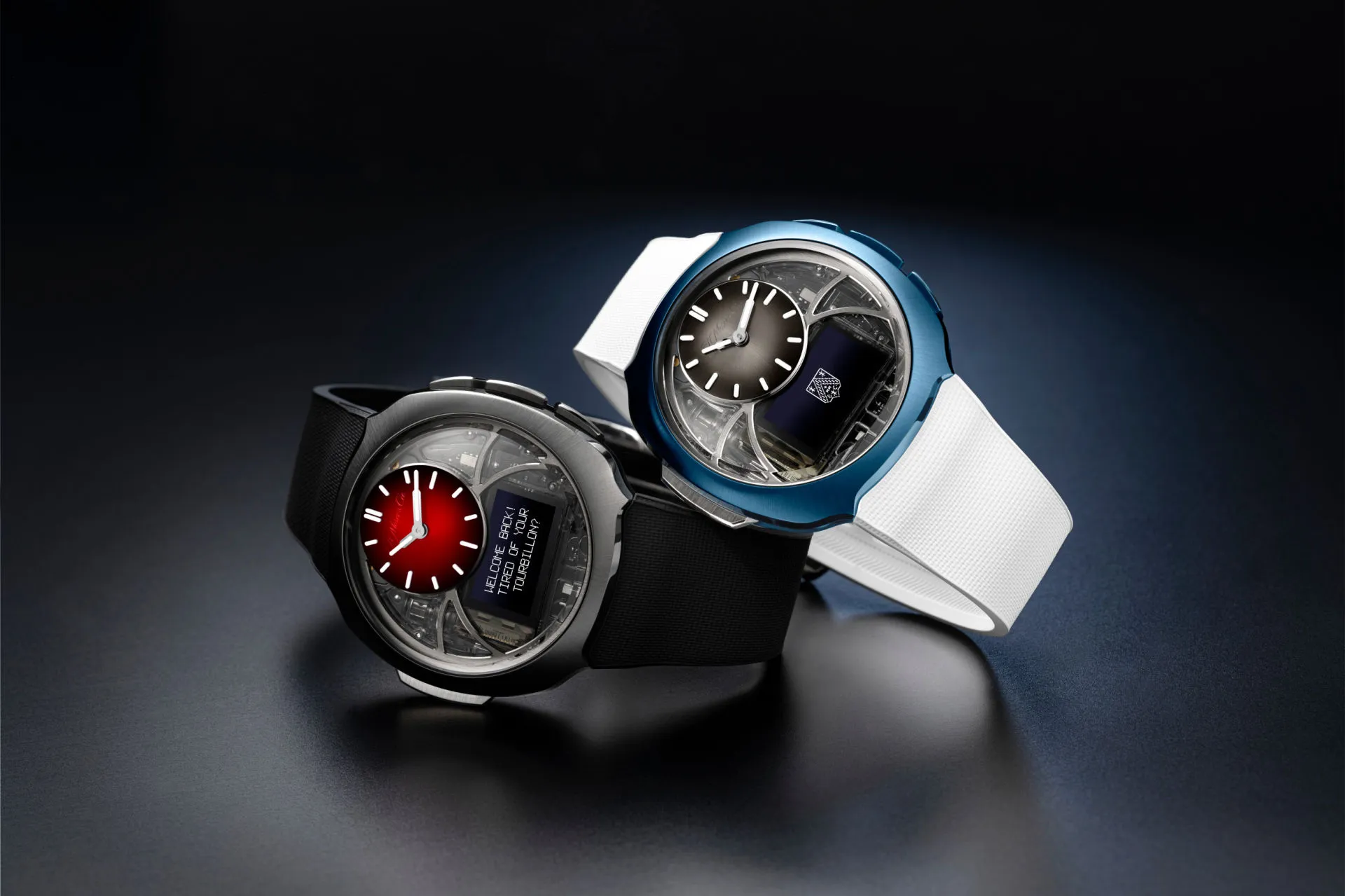
Developed through direct dialogue with Alpine drivers seeking a watch as stylish as their single-seaters, the Streamliner Alpine Drivers Edition showcases the first skeletonised version of the watchmaker’s AgenGraphe calibre developed with custom movement specialist, Agenhor. This chronograph transforms the dial into a transparent window revealing mechanical poetry inspired by the racetrack.
Every detail draws racing inspiration: V-shaped bridges echo Formula 1 suspension geometry, while the movement’s central bridge is deliberately shaped like a driver’s helmet. Most dramatically, the skeleton rotor positioned between movement and dial evokes the dynamic lines of an Alpine A110 wheel rim. The 42.3mm steel case receives blue PVD treatment to match Alpine’s signature colours. The fully skeletonised dial eliminates traditional subdials in favour of central minute and seconds display, emphasising racing-crucial legibility. The HMC 700 calibre features 434 components with column-wheel chronograph architecture and flyback function – essential when every hundredth of a second matters in Formula 1 timing.
Credit: H. Moser & Cie.
The Streamliner Alpine Mechanics Edition shatters conventional design as the world’s first timepiece designed specifically for Formula 1 team operations. This hybrid creation combines mechanical timekeeping with cutting-edge connected technology. The mysterious black digital display activates on demand to reveal GMT with country selector, split-seconds chronograph measuring to 1/100th second and specialised F1 mode with race countdowns and team alerts.
Its 42.6mm steel case houses the revolutionary Calibre DI0 – developed with Swiss tech firm Sequent – boasting remarkable autonomy: one year in time-only mode or six Grand Prix weekends when fully connected. A small domed Funky Blue fumé dial at 12 o’clock preserves Moser’s horological soul, while displaying traditional time. The duo is sold together in an exclusive presentation case that’s limited to 200 sets.
Credit: Breitling
The Swiss manufacture has also carved its own distinctive path in racing-inspired timepieces since the 1960s. The newly unveiled pair of Top Time B01 Racing timepieces prove this legacy continues with bold authenticity.
Limited to 750 pieces each colour, the chronographs resurrect Willy Breitling’s – founder Léon Breitling’s grandson, who led the company from the 1930s through the 1970s – most unconventional 1960s designs. Inspired by classic car instrumentation, they feature striking stainless steel cushion cases and the signature elliptical “dashboard” dial motif with quirky “squircle” subdials. At 38mm, they perfectly balance vintage proportions with modern wearability.
Powered by the Swiss watchmaker’s Manufacture Caliber 01, a COSC-certified chronometer with a 70-hour power reserve, these two timepieces deliver serious horological performance beneath their modern-retro looks. The intuitive mushroom pushers allow for quick, instinctive timing operations essential for racing applications.
Available in two striking configurations – a black-and-white dial with a beige perforated leather strap or a green-and-white dial with a matching perforated leather strap – the models encapsulate the freewheeling spirit of 1960s motorsport, while delivering contemporary Swiss chronograph excellence.
Credit: Jacob & Co.
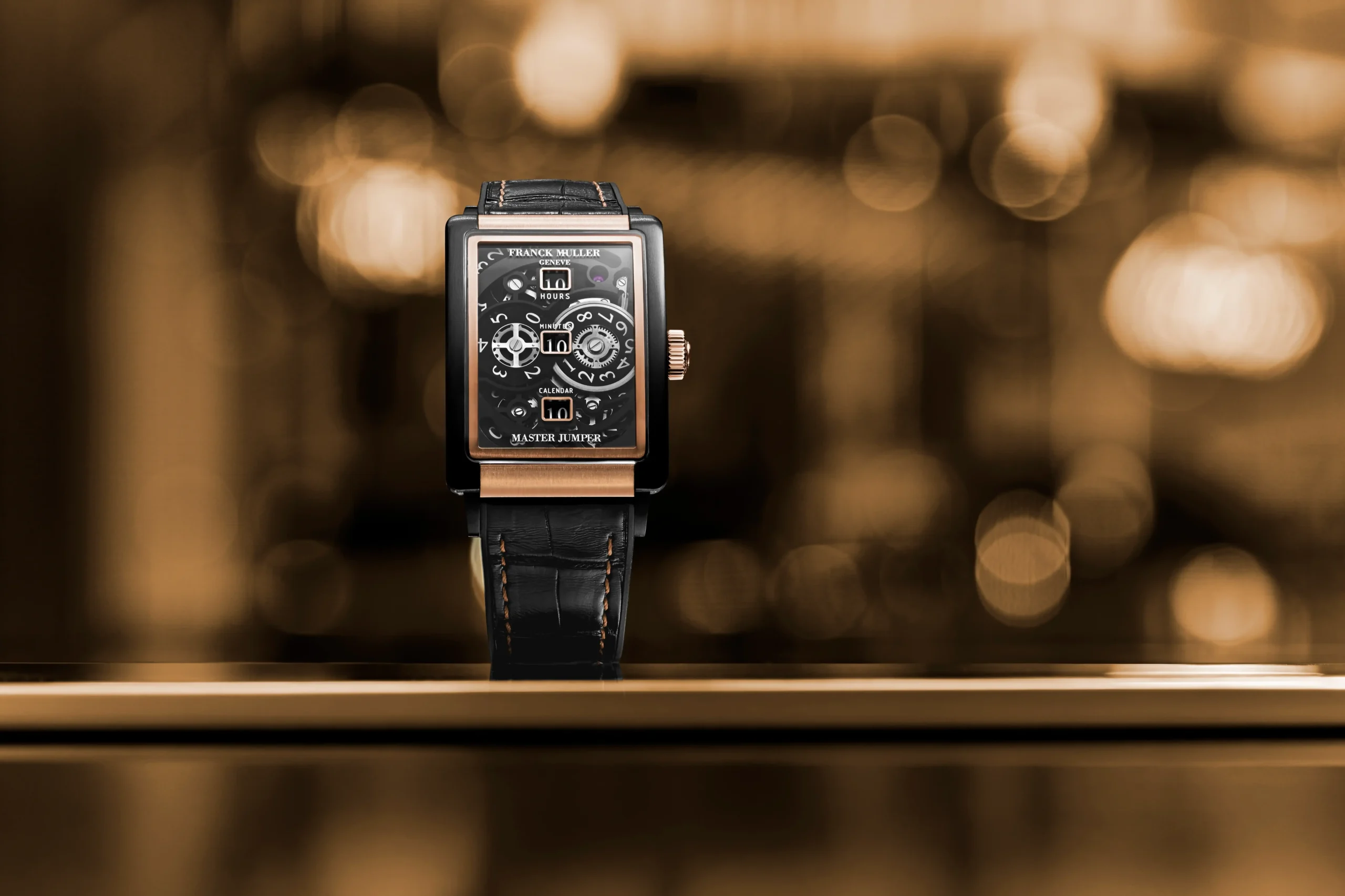
The Bugatti Tourbillon rewrites the car-watch playbook. Instead of developing another racing chronograph as seen in other partnerships, the New York jeweller and watchmaker delivers pure mechanical drama in a timepiece that replicates the new Bugatti Tourbillon plug-in hybrid hypercar’s V16 engine architecture in miniature form.
A total of 10 defining design elements are directly drawn from the hypercar. Measuring a commanding 52mm by 44mm with a thickness of 15mm, the watch’s case shape mirrors that of the Bugatti Tourbillon car, complete with the front grille flanked by two side radiator inlets. The case houses the extraordinary Caliber JCAM55, featuring a functional V16 engine block automaton meticulously carved from a single piece of transparent sapphire – a material notoriously difficult and costly to shape. Sixteen precision-crafted titanium pistons are driven by a remarkable achievement of micro-engineering: a single-axis crankshaft that is among the longest, most elaborate and delicate components ever manufactured in watchmaking. When activated via the crown pusher, this miniature engine fires in proper sequence, with all pistons moving up and down in perfect synchronisation to mirror a real internal combustion engine for 20 seconds per cycle.
The horological complexity extends far beyond mere visual spectacle. A 30-second flying tourbillon – the fastest Jacob & Co. has ever produced – regulates the movement’s timekeeping, while the revolutionary retrograde jumping hours and minutes completely reimagine time display to mimic an automotive RPM counter, beginning at zero rather than the traditional 12 o’clock position. Both hands execute dramatic jumps at the completion of their 270-degree arcs, resetting to zero and creating visual space for the legendary Bugatti logo to take centre stage.
The Bugatti Tourbillon follows one of Jacob & Co.’s design principles, which is not to use side crowns. It has two: The winding crown, which doubles as the automaton start pusher, is located at the bottom of the case, while the time-setting crown is located on the caseback and is fitted with the brand’s signature lift-out bow for optimal comfort and ease of use.
The timepiece incorporates an unprecedented dual power reserve system. the movement itself maintains 48 hours of autonomy, while the engine block automaton stores sufficient energy for 20 consecutive animation sequences on a single, full wind. The dashboard layout faithfully mirrors the Bugatti hypercar’s interior architecture, complete with sapphire crystal “side windows” that offer lateral glimpses into the intricate 557-component movement, while exhaust manifolds grouped by cylinder banks add authentic automotive detailing to the mechanical masterpiece.
Available in rose gold and three titanium executions, the Bugatti Tourbillon is limited to 250 pieces to match the car’s production run – with the black DLC titanium model capped at 150.
Credit: Bell & Ross
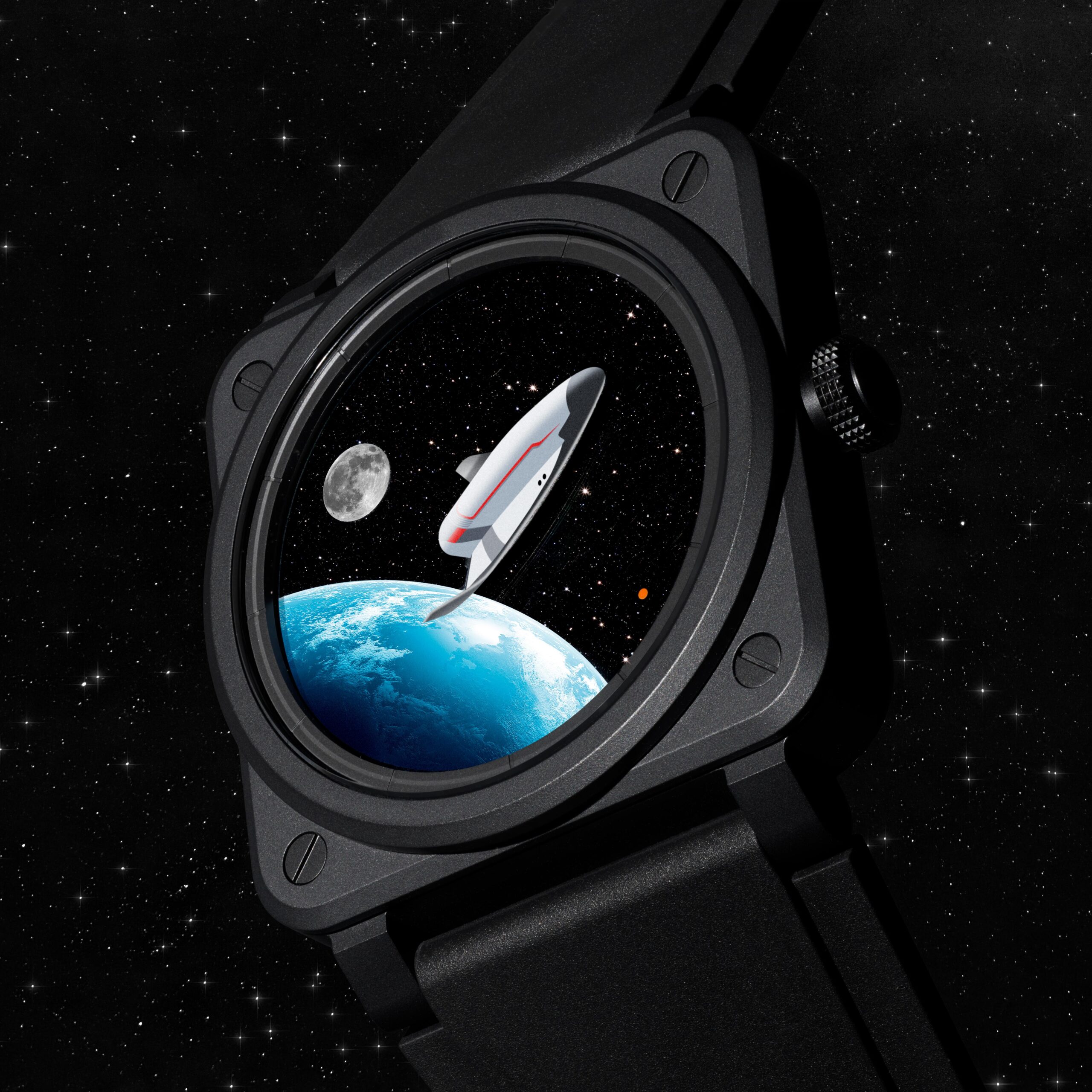
With eight years of motorsport experience informing its design, the BR-X5 Racing translates racing car dashboard functionality directly to the wrist. This 500-piece limited edition, offered on a titanium bracelet or black rubber strap, prioritises the core demands of motorsport timing: precision, legibility and durability under extreme conditions.
Drawing inspiration from race-car instrumentation, the dial layout features a central seconds hand with chequerboard graduation that measures time to quarter-second precision that’s essential for accurate lap timing. Minutes are displayed on the inner bezel outside the dial, while the hours are inscribed on the dial glass. The red-tipped seconds hand enhances quick readability during split-second timing decisions.
Bell & Ross applies motorsport materials philosophy throughout the 41mm case construction. The titanium and carbon fibre sandwich construction mirrors race car engineering, where weight reduction cannot compromise structural integrity. Four titanium screws secure the assembly, while the woven carbon bezel directly references materials found in Formula 1 car cockpits.
The automotive connection runs through the details: the power-reserve reads like a car’s fuel gauge – “E” for empty, “F” for full – indicating the watch’s remaining power from 0 to 3 days. Powered by the automatic in-house calibre BR-CAL.323, a COSC-certified chronometer movement, this timepiece demonstrates how aviation watchmaking expertise translates effectively to motorsport applications, creating a tool genuinely suited for racing environments.
Credit: Zenith
While not directly motorsports-related like many chronographs in this category, Zenith’s Chronomaster Sport Meteorite deserves recognition for housing one of the watch world’s most revered chronograph movements. The El Primero, launched in 1969 as the world’s first automatic chronograph calibre, remains a benchmark of high-frequency precision that has influenced motorsports timing for decades.
The latest variant elevates this 2021 Grand Prix d’Horlogerie de Genève (GPHG) Chronograph prize winner to cosmic heights – literally. Each dial’s meteorite disc originated millions of years ago in deep space, ultimately arriving at Zenith’s Le Locle workshop, where artisans hand-finish each piece to reveal its one-of-a-kind Widmanstätten pattern – naturally occurring geometric structures formed by slow cooling in the cosmic void.
The 41mm stainless-steel case frames the El Primero 3600, a 5Hz (36,000 vph) calibre with a silicon escape wheel that drives a central chronograph hand completing a full rotation every 10 seconds for precise 1/10th of a second readings. A black ceramic bezel calibrated over 10 seconds underscores that cadence, while Zenith’s signature tri-colour counters in silver, light grey and anthracite contrast crisply against the meteorite dial’s singular aesthetic.
Delivered on an integrated steel bracelet with an additional black rubber strap for versatility, this remarkable timepiece – once a Japan-exclusive – is now available worldwide through Zenith boutiques and authorized retailers.