

- Watch Knowledge
Chronographs, Calendars, and Beyond: 10 Watch Complication Types to Know
20 Nov 2025

For many, the term ‘watch complication’ might be a bit puzzling, but it lies at the heart of haute horlogerie.
So, what is a watch complication? Simply put, it is any function a mechanical watch performs beyond telling the time – hours, minutes, and seconds. These intricate mechanisms are testaments to technical mastery, transforming a simple timepiece into a sophisticated tool. Read on for our list of watch complications, each a profound expression of watchmaker artistry, ingenuity, and skill.
Timekeeping and Travel Complications

Credit: OMEGA
Chronograph
The chronograph complication is a sophisticated stopwatch integrated into a wristwatch, allowing the wearer to measure elapsed periods. Activated by distinctive pushers flanking the crown, it works by engaging a separate mechanism to track seconds, minutes, and hours.
Key variations include:
- Flyback
- Monopusher
- Split-Seconds
- Regatta Timer
This highly practical watch complication type is invaluable for athletes, engineers, or anyone needing precise timing.
Iconic examples featuring this beloved complication include the Omega Speedmaster.

Credit: Bell & Ross
GMT and Dual Time Zone
For the globetrotting individual, the GMT or Dual Time Zone watch complication type is indispensable.
This function allows a watch to display multiple time zones simultaneously, often through an additional 24-hour hand or a dedicated sub-dial. From pilots tracking different longitudes to business professionals coordinating across continents, this practical complication is cherished by users.
Variations within this watch complication type are:
- Caller GMTs
- True GMTs
Pioneering examples include the Bell & Ross is celebrated for their robust functionality and clear readability across time zones.

Credit: BOVET
World Timer
Designed for the global citizen, the World Timer stands as a remarkable type of watch complication that allows wearers to view the current time in all 24 major time zones at a glance.
Typically, it achieves this through a rotating 24-hour disc synchronised with a city ring on the dial or bezel, listing key cities.
A prominent example showcasing this functionality is the BOVET Recital 30. As it allows users to instantly reference times across continents with a roller system.

Credit: Bell & Ross
Power Reserve Indicator
The Power Reserve Indicator displays the remaining hours or days a mechanical timepiece has before it needs rewinding. It is typically presented as a gauge on the dial, such as on the Bell & Ross BR X3.
This feature offers peace of mind, allowing owners to ensure their watch remains accurately powered.
Date Complication

Credit: Franck Muller
Date Display
Among the most universally appreciated watch complication types is the Date Display, providing immediate reference to the current day of the month. This feature typically operates via a rotating disc beneath the dial, visible through a small aperture.
Variations within this category include:
- Large or Big Date
- Pointer Date
While often simple, its utility is immense for daily organisation and record-keeping.
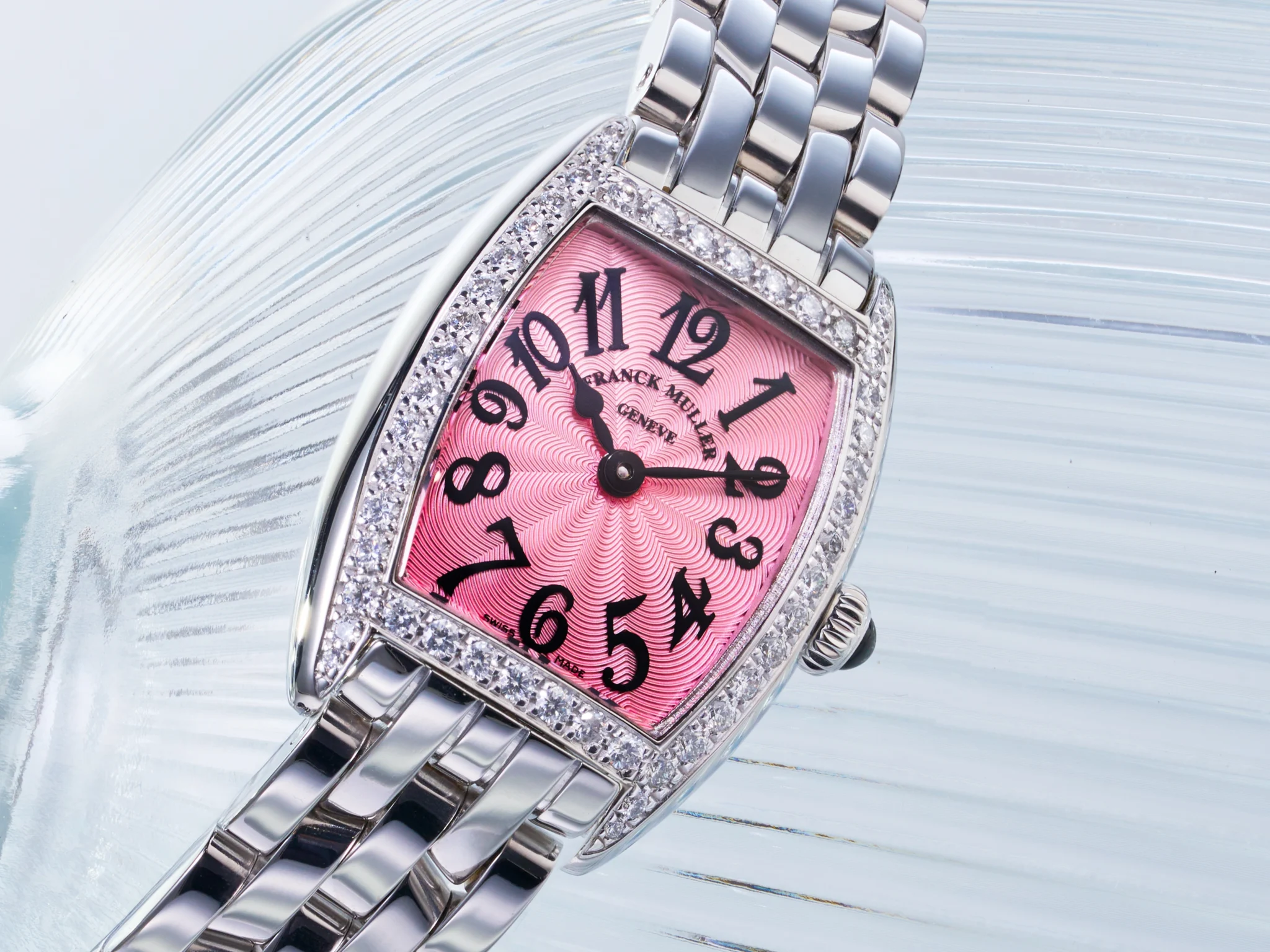
A historical example is the Franck Muller #FR2NCK MULLER Vanguard Beach Limited Edition gives meaning to the date aperture — not just telling time, but telling a story.

Credit: TUDOR
Day Date Display
Building on the practicality of a simple date, the Day-Date watch complication simultaneously displays the day of the week and the current date. It achieves this through separate apertures on the dial, making it highly intuitive to read.
Calendar Complication
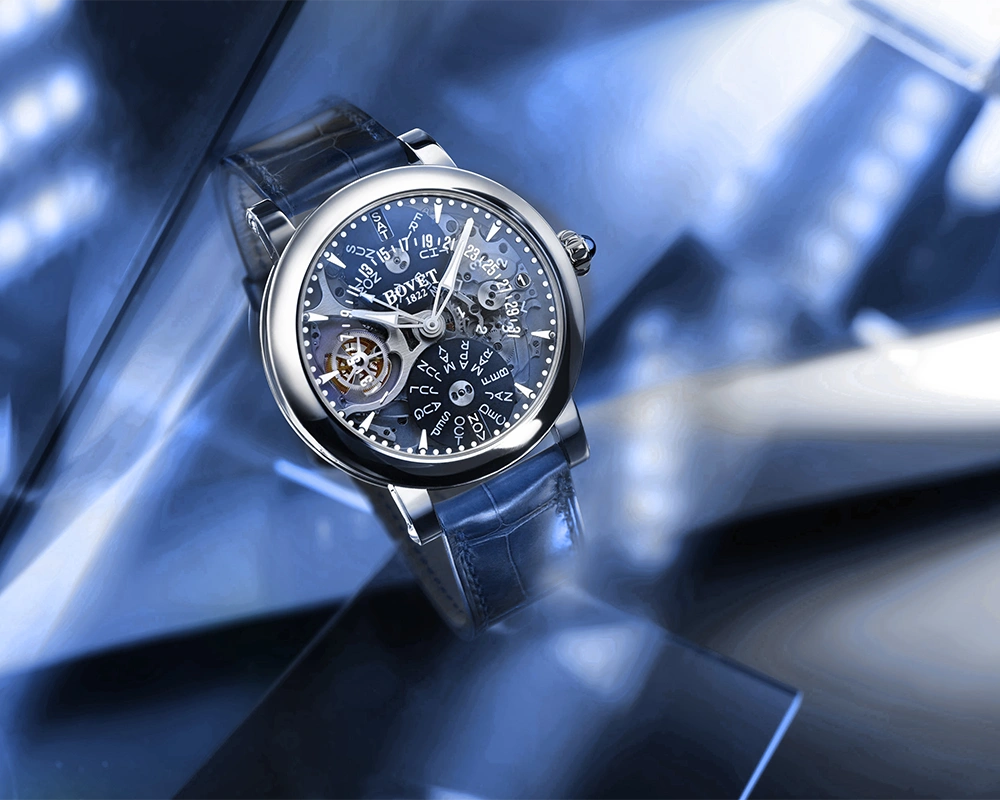
Credit: BOVET
Annual Calendar
Annual Calendar is a highly prized type of watch complication. It automatically accounts for the varying lengths of months, distinguishing between those with 30 and 31 days. Consequently, it only requires manual adjustment once a year, at the end of February, to transition to March 1st. As such, the wearer does not have to make frequent date corrections.
Perpetual Calendar
A feat in micro-engineering, the Perpetual Calendar possesses a mechanical memory capable of accurately displaying the date, day, month, and leap year cycle without requiring any manual adjustment until the year 2100.
This ‘set it and forget it’ convenience brings immense value to users on top of its elegant artistry.
The BOVET Récital 21 exemplifies this sophisticated complication, set within an elegant case.
Mechanical Complications

Credit: Franck Muller
Tourbillon
While often featured on watch complications lists, the Tourbillon is not a watch complication in the traditional sense as it doesn’t add an extra function beyond time telling.
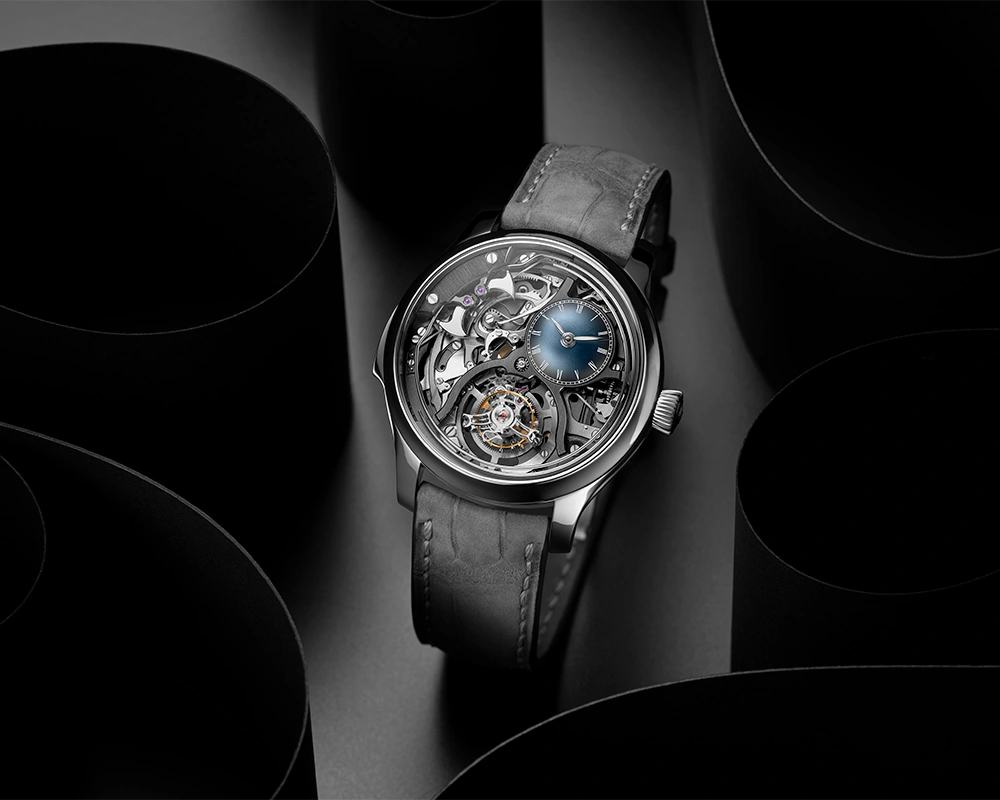
However, it is a highly sophisticated and complex mechanism designed to enhance accuracy. It works by housing the escapement and balance wheel within a cage that rotates 360 degrees every minute. This continuous rotation neutralises the effects of gravity on the delicate regulating organs of the movement to improve precision.
The Franck Muller Long Island Evolution Giga Tourbillon is a magnificent example, notable for its exceptionally large tourbillon cage.

Credit: Bvlgari
Minute Repeater
The Minute Repeater is a type of complication that audibly chimes the time on demand. Activated by a slide or pusher on the case, the mechanism uses tiny hammers to strike coiled gongs, producing distinct tones for the hours, quarter-hours, and minutes.
Before electricity was readily available, it allowed wearers to tell the time in the dark. Today watches with this type of complication, such as Bvlgari Octo Finissimo Minute Repeater Carbon.
Study in Art and Utility
Each type of watch complication is a mechanical marvel – a testament to unparalleled craftsmanship and technical ingenuity. From precisely timing events with a chronograph to effortlessly tracking global time zones, these sophisticated features offer unique benefits.
Discover your own piece of horological artistry with Cortina Watch’s range of luxury timepieces today.
Related Insights
View All Insights-

- Watch Knowledge
The Latest Aviation-Inspired Watches to Rule the Skies
09 Sep 2026
-

- Brand Spotlight
Why Watch Size Matters (But Not the Way You Think)
09 Sep 2026
-
- News
Streamliner Tourbillon Skeleton Ceramic Alpine Limited Edition: A New Chapter, A New Material
09 Sep 2026
-

- Watch Knowledge
Unveiling the Minute Repeater Watch
09 Sep 2026
-

- Brand Spotlight
Cartier’s Shift Towards Smaller Dials
08 Sep 2026
-

- Cortina Curates
Cortina Curates Local: The Art of Stillness by Taiwanese Glass Artist Chen Chien-Chih
08 Sep 2026