

- Watch Knowledge
Dive Watch Essentials: Understanding How the Rotating Bezel Functions
01 Dec 2025

What sets a diving watch apart from a regular timepiece is more than water resistance — it is its purposeful construction, designed for the precise and unforgiving world beneath the waves. For connoisseurs of fine watchmaking, luxury dive watches are not merely ornamental; they are instruments of trust, engineered for accuracy and built to withstand pressure, both environmental and metaphorical.
Central to their function is the rotating bezel — a simple yet ingenious tool that anchors the timepiece’s diving credentials. In this guide, we explore how it works, why it matters, and how to use the diving watch with confidence.
Understanding the Dive Watch Basics
A proper dive watch combines functional craftsmanship with visual clarity. Key components include a corrosion-resistant case (often stainless steel or titanium), a screw-down crown for sealing out water, a legible dial with luminous markers, and of course, the rotating bezel.
Water resistance ratings are equally important — 50m and 100m may suffice for surface-level activities, but 200m is the professional benchmark for scuba diving. Look for ISO 6425 certification or equivalent to ensure reliability under pressure.
These elements ensure that your watch isn’t just a statement, but a dependable companion underwater.

Credit: Bell & Ross
Rotating Bezel: The Primary Timing Tool
What Is a Diving Bezel and Why Does It Exist?
The rotating bezel exists to simplify a diver’s most critical task: tracking elapsed time underwater. Before dive computers, mechanical dive watches were the sole method for monitoring bottom time and ensuring a safe ascent. The bezel’s purpose is to mark the start of a dive and measure time spent below the surface with a single glance — a life-saving function hidden in plain sight. It is a reflection of the dive watch’s roots in tool-watch tradition, where functionality takes precedence over flourish.
Anatomy of the Dive Bezel
Dive bezels are typically unidirectional, rotating counterclockwise only — a safety-first design that prevents accidental extensions of dive time. At the 12 o’clock position, the zero marker (often a luminous triangle) is aligned with the minute hand before descent. Graduations run from 0 to 60 minutes, with the first 15 or 20 minutes usually highlighted — a nod to typical no-decompression limits. This intuitive scale allows divers to quickly assess remaining time without relying on memory or recalculations.
How Does the Dive Bezel Mechanism Work?
The bezel’s mechanism is built for precision. It rotates in a ratcheting fashion, clicking firmly into place with each turn. Beneath the bezel lies a spring-and-ball or click-spring system that provides tactile resistance, ensuring the bezel doesn’t shift unintentionally. This mechanical integrity is not only reassuring underwater — it also appeals to collectors who appreciate traditional watchmaking ingenuity expressed in functional design.
How To Use the Dive Watch Bezel

Credit: Bell & Ross
Before Entering the Water
Before a dive, preparation is key. Align the bezel’s zero marker (usually a luminous triangle at the 12 o’clock position) with the watch’s minute hand to mark the start of your dive. This should be done carefully — even a small misalignment can result in inaccurate timing and reduce your safety margin underwater. It’s also wise to synchronise the watch’s time with a secondary device or a buddy’s timer for redundancy. This simple ritual is foundational to every successful dive.
During the Dive
Once underwater, the bezel becomes your visual anchor. As time passes, the minute hand moves forward, while the bezel remains fixed, allowing you to instantly see how many minutes have elapsed since the dive began. This makes it easy to monitor dive duration and stay within no-decompression limits. Many divers also use the bezel to calculate safety margins, giving themselves a buffer before surfacing.
Advanced Timing Techniques
Experienced divers employ the bezel for more than just bottom time. It can be used to measure decompression stops by aligning the bezel at the start of a stop and watching the minute hand progress. It also assists in multi-level dive planning, where time at different depths must be managed. Even surface intervals — the time between dives — can be conveniently timed using the same bezel functionality, adding versatility to this elegantly simple mechanism.
Common Mistakes and Safety Tips
Despite its utility, improper bezel use can lead to errors. One common mistake is failing to realign the zero marker precisely — even a one-minute discrepancy can affect safety margins. Remember, the unidirectional design is intentional: it prevents the bezel from being accidentally rotated in a way that would overestimate remaining dive time. However, a dive watch is just one layer of safety. It should never replace a dive computer or thorough dive planning. Redundancy — whether in tools or training — is the true hallmark of safe diving.
Dive Watches in Action

Credit: Franck Muller
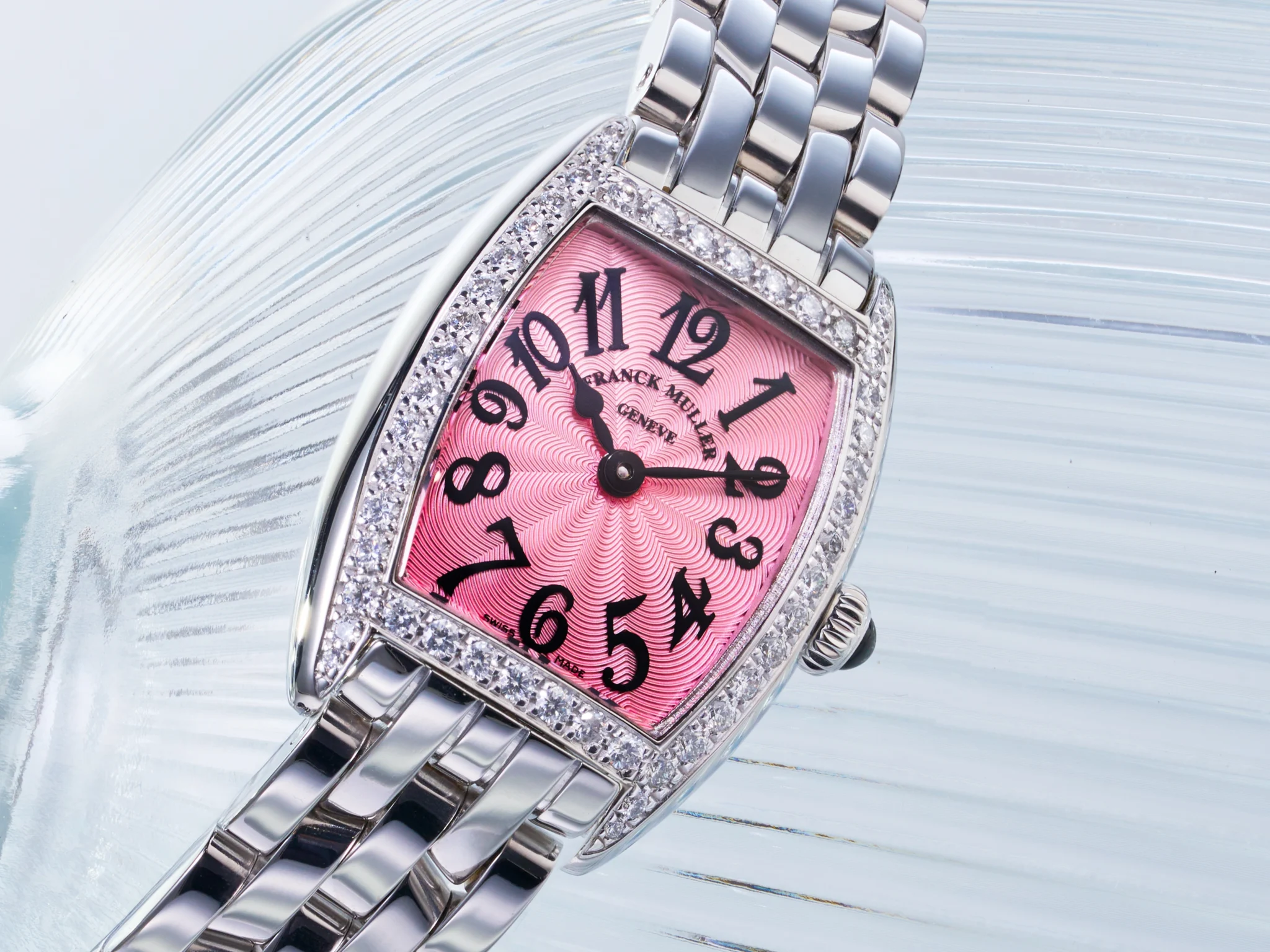
Franck Muller Skafander
The Franck Muller Skafander offers a distinctive interpretation of the dive watch, combining a robust case with integrated pushers to control the internal rotating bezel. This unique complication allows for precise underwater timing while preserving the elegance of Franck Muller’s signature design language — a compelling fusion of performance and sophistication.

Credit: Bell & Ross
Bell & Ross Diver BR-03
Rooted in aeronautical design, the Bell & Ross Diver BR-03 adapts cockpit readability to underwater demands. Its square case stands apart, while the dial layout offers clarity and contrast at depth. Built for reliability in professional conditions, it balances military-grade functionality with a modern, minimalist aesthetic.

Credit: Omega
OMEGA Seamaster
The OMEGA Seamaster is synonymous with ocean exploration. Featuring professional-grade specifications — including a helium escape valve, co-axial escapement, and 300m+ water resistance — it is crafted for divers who value both heritage and precision. Its lume, ceramic bezels, and chronometer-rated movements underscore its commitment to functional beauty.
Frequently Asked Questions About Diving Watches and Their Bezels
How do you use a diver’s watch?
To use a diver’s watch, align the bezel’s zero marker with the minute hand just before descent. As time passes, you can read elapsed dive time at a glance by checking how far the minute hand has moved along the bezel scale. This method helps monitor dive duration and manage no-decompression limits effectively.
What to use a watch bezel for?
The bezel is primarily used for timing purposes — especially underwater. However, beyond diving, there are many ways to use your watch bezel — from tracking a dive to timing the parking meter. And just as many ways to wear your watch. If it’s going to be part of your everyday routine, make sure to choose a watch strap that’s up to the task.
What is the point of a rotating bezel?
The rotating bezel serves as a simple, reliable method for measuring elapsed time.
For divers, it’s a safety feature that helps monitor dive duration. For collectors, it represents one of the most iconic and functionally elegant aspects of tool-watch engineering — a detail that exemplifies purpose-driven design.
For those who appreciate mechanical artistry, the Franck Muller Grand Central Tourbillon is a spectacular showcase of this philosophy.
Discover your own piece of horological artistry with Cortina Watch’s range of luxury timepieces today.
Related Insights
View All Insights-

- Watch Knowledge
The Latest Aviation-Inspired Watches to Rule the Skies
09 Sep 2026
-

- Brand Spotlight
Why Watch Size Matters (But Not the Way You Think)
09 Sep 2026
-
- News
Streamliner Tourbillon Skeleton Ceramic Alpine Limited Edition: A New Chapter, A New Material
09 Sep 2026
-

- Watch Knowledge
Unveiling the Minute Repeater Watch
09 Sep 2026
-

- Brand Spotlight
Cartier’s Shift Towards Smaller Dials
08 Sep 2026
-

- Cortina Curates
Cortina Curates Local: The Art of Stillness by Taiwanese Glass Artist Chen Chien-Chih
08 Sep 2026