
- Brand Spotlight
Why Watch Size Matters (But Not the Way You Think)
Written by: Justin Ng
09 Sep 2026
Bigger is not always better. Instead of size, choose the perfect watch based on fit, proportion and style.
One of the most decisive factors when picking the right watch is size. Unlike innovation and craftsmanship, which can be explained through storytelling, how a watch fits on a wrist can only be experienced in person.
Watch Sizes Are More Than Just a Numbers Game
When it comes to making a statement, the consensus is that the bigger it is, the better it is. While this notion partly holds true for watches, it is not always the case.
On the surface, a large watch possesses presence and impact. However, for discerning watch collectors harbouring other important considerations, selecting the right size matters too – and bigger is not always better.
A watch’s wearability extends beyond size on paper alone; proportion, case design, fit and wrist size collectively determine whether a watch makes a perfect fit.
Big equals masculine and small watches are for ladies are simplistic assumptions. Personal conviction should overwrite any generalisation when investing in a luxury watch.

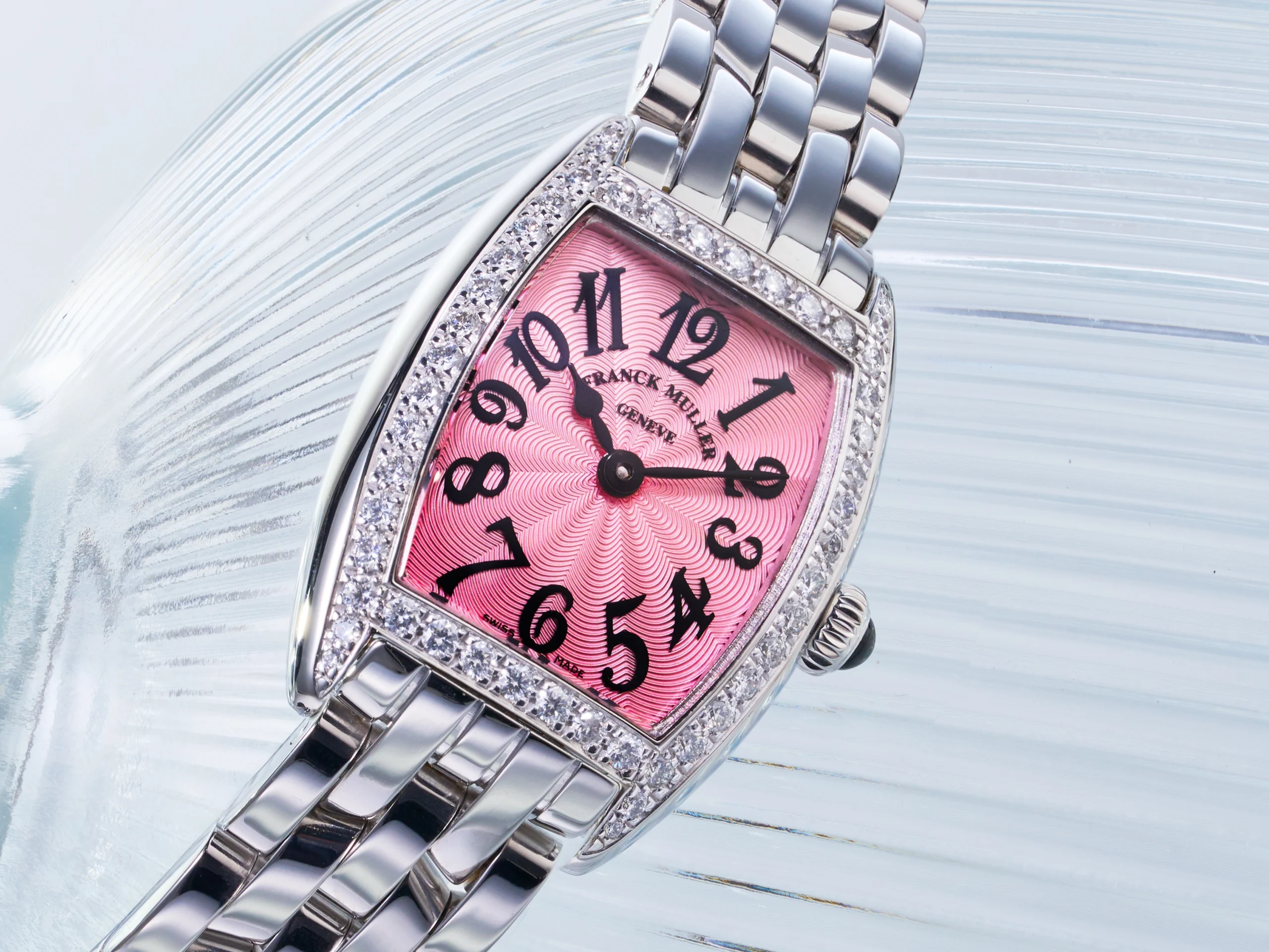
Franck Muller’s Cintrée Curvex 2502 QZ collection exclusive to Hong Kong and Macau features a signature case design (credit: Franck Muller)
The Watch Sizing Basics
The watch sizing basics can be explained by case diameter, case thickness, lug-to-lug distance and strap width. The size of a watch is informed by the size of its watch case. For example, a 40mm round case features an identical diagonal measurement.
On the other hand, if a watch features a non-rounded case shape such as tonneau, square and rectangle, both width and length are disclosed independently. For example, Franck Muller’s Cintrée Curvex 2502 QZ collection exclusive to Hong Kong and Macau features a sensual 20.1mm x 27.1mm case, indicating a width of 20.1mm and a length of 27.1mm.
Watches are grouped into numerous categories, one of which is by their case sizes. Any watch case under 36mm is considered small, while anything above 43mm is large. Watches in between are considered modern, medium sized or unisex.
Instead of being gender specific, watch size preference is individual driven. Some gentlemen prefer smaller watches, while some ladies enjoy wearing larger watches. Franck Muller offers the Vanguard collection in an array of styles, complications and sizes to appeal to various watch collectors, showcasing the versatility of tonneau cases.
Apart from case size, case thickness, lug-to-lug distance and strap width all influence how the watch is perceived visually and ergonomically.
More Than Millimetres: What Actually Affects Fit

The Franck Muller Cintrée Curvex 2502 QZ collection features short diamond-set lugs for exceptional sparkles and comfort (credit: Franck Muller)
Lug-to-Lug Distance
A term familiar to enthusiasts, lug-to-lug distance provides clarity on how a watch sits on the wrist. More comprehensive than case size alone, it measures the length spanning the top lug and the bottom lug.
Not all watches feature lugs and not all lugs are designed the same. The design itself determines how a watch appears on the wrist. Generally watches with tonneau, squared and rectangular cases feature tapered or no lugs at all. Watches with integrated bracelets also exemplify this streamlined design. In the absence of protruding lugs, straps are integrated ingeniously into the underside of the case. Franck Muller’s distinctive Vanguard collection is one great example.
Vintage and vintage-inspired watches typically feature flared lugs that extend further away from the case than contemporary watches with curved lugs. This implementation ensures a smaller watch has a larger presence on the wrist.
Case Thickness
Case thickness is influenced by a watch’s purpose and the number of functions a watch possesses.
For example, dive watches require thicker sapphire crystals and robust cases to provide enhanced water resistance, while chronographs are fitted with extra mechanisms rendering complex movements a necessity.
With these additional demands, it is customary for sports watches to be thicker than traditional dress watches. The latter are designed with slimmer cases offering a discreet profile and to slide under the cuff effortlessly.
In instances where the unique selling point of a watch is its thin case, the watch is marketed as ultra-thin or -slim. A number of watchmakers have made shaving off extra millimetres a worthwhile pursuit, showcasing innovative engineering and revolutionary craftsmanship.

Franck Muller’s Cintrée Curvex 2502 QZ collection features a sculpted five-link bracelet for maximum ergonomics (credit: Franck Muller)
Strap and Bracelet Style
The width of a bracelet or strap is determined by the width of the lugs. Some watchmakers prefer wider lugs, while others opt for tighter spacing.
The width, material and construct of a strap or bracelet contribute to its perceived wearability. A bracelet with broad links such as a three-link can give the illusion of being wider than a Milanese mesh bracelet even though both are of the same width.
Dark-coloured leather straps exude refinement, while precious metal bracelets spell luxury. The flexibility of the material used influences how the strap or bracelet hugs the wrist. Crafted from stainless steel, the bracelet of the Franck Muller Cintrée Curvex 2502 QZ collection embraces the wrist completely.
In order to balance bulk and weight, watchmakers are introducing lighter materials, such as titanium and carbon composite, for larger watches. Having a balanced weight between the case and the bracelet prevents a lopsided, top-heavy feeling when wearing a large-case watch.
How to Choose the Right Watch Size

The Franck Muller Vanguard collection ranges from classic to sporty (credit: Franck Muller)
Measuring the Wrist
The most accurate way to measure the wrist’s circumference is using a tailor tape. Overlaying a ruler on the wrist also provides an estimated width.
As a general reference, for wrist circumference under 6.5 inches, watches in the 34-38mm range are recommended; consider watches in the 38-42mm range for 6.5”-7.5” wrists; and 42mm and above for 7.5”+ wrists depending on fit.
Nonetheless, collectors should feel comfortable and listen to their own instincts when deciding upon the right watch size rather than strictly following the recommendation above. There is no one size fits all.
Match the Watch to Own Style
The belief that large watches are for men and small watches are for women is dated.
Historically, watches tend to be small. Vintage men’s watches fell within the range of 33mm and 38mm – small by today’s standards – due to a combination of factors including miniaturisation, decorum and the need for watches to slide under a shirt’s cuff comfortably.
The subsequent relaxation of dressing, and the advent of complex watches and larger sports-oriented watches influenced the modern upsizing.
Small watches under 38mm boast vintage charm and understated elegance, while large watches over 42mm appear modern, impactful and sporty. For a sweet spot, try 40mm; it is the equivalent of smart casual.
Try Before Buying
Thanks to augmented reality, a number of websites and apps are now equipped with virtual try-on tools and crowd-sourced feedback to help collectors make informed decisions.
However, an appointment at the boutique is highly recommended. Consult with experienced representatives and pay attention to comfort, proportion, how the watch is set against the outfit of the day, and if that will carry over to another attire.
Rethinking Size as Style

Visualise how the watch pairs with different outfits (credit: Franck Muller)
A watch makes an excellent accessory whether it is on its own as a statement piece or to complete the whole ensemble. There is one for each occasion, a versatile number for all events, and a favourite to mark a special moment. It can be timeless, stylish or distinctive.
The ideal size is simply a matter of preference, influenced by comfort, fit and purpose. Catering to different wrists, watch brands increasingly offer a variety of case sizes, strap options and easy-change mechanisms, with an emphasis on right sizing.
There is no hard and fast rule when it comes to selecting the perfect watch. Ultimately, it comes down to what wearers feel best about their choices and being able to put on their watches with confidence.
Final Thoughts on Watch Sizing
The published case size of a watch tells only half of the story. As everyone has different build and taste, only an in-person appointment with an experienced advisor can the collector experience how a watch feels on the wrist.
Get in touch with Cortina Watch today to learn more about the expansive collection of luxury watches available in store and on our website. https://my.shop.cortinawatch.com/.
Our expert advisors are on hand to share their useful pointers, helping collectors discover the perfect watch.
Discover the latest Franck Muller watches at our boutiques today.
Related Insights
View All Insights-
- Curated by Cortina
Design-Driven Timepieces: Watches That Double as Statement Jewellery
23 Oct 2026
-

- News
Franck Muller Celebrates The Art of Skeletonisation
22 Oct 2026
-

- News
Introducing the H. Moser & Cie. Pioneer Cylindrical Tourbillon Skeleton Aventurine: An Exclusive Creation by Saquon Barkley
20 Oct 2026
-

- News
Introducing Bell & Ross BR-03 Space Mission
19 Oct 2026
-

- Watch Knowledge
Moonphase Watches and the Art of Celestial Timekeeping
12 Oct 2026
-

- News
Bell & Ross BR-03 Green Radar Ceramic: The Iconic Radar Collection Returns for Its Fourth Iteration
08 Oct 2026