
- Watch Knowledge
Unveiling the Minute Repeater Watch
Written by: Justin Ng
18 Aug 2026
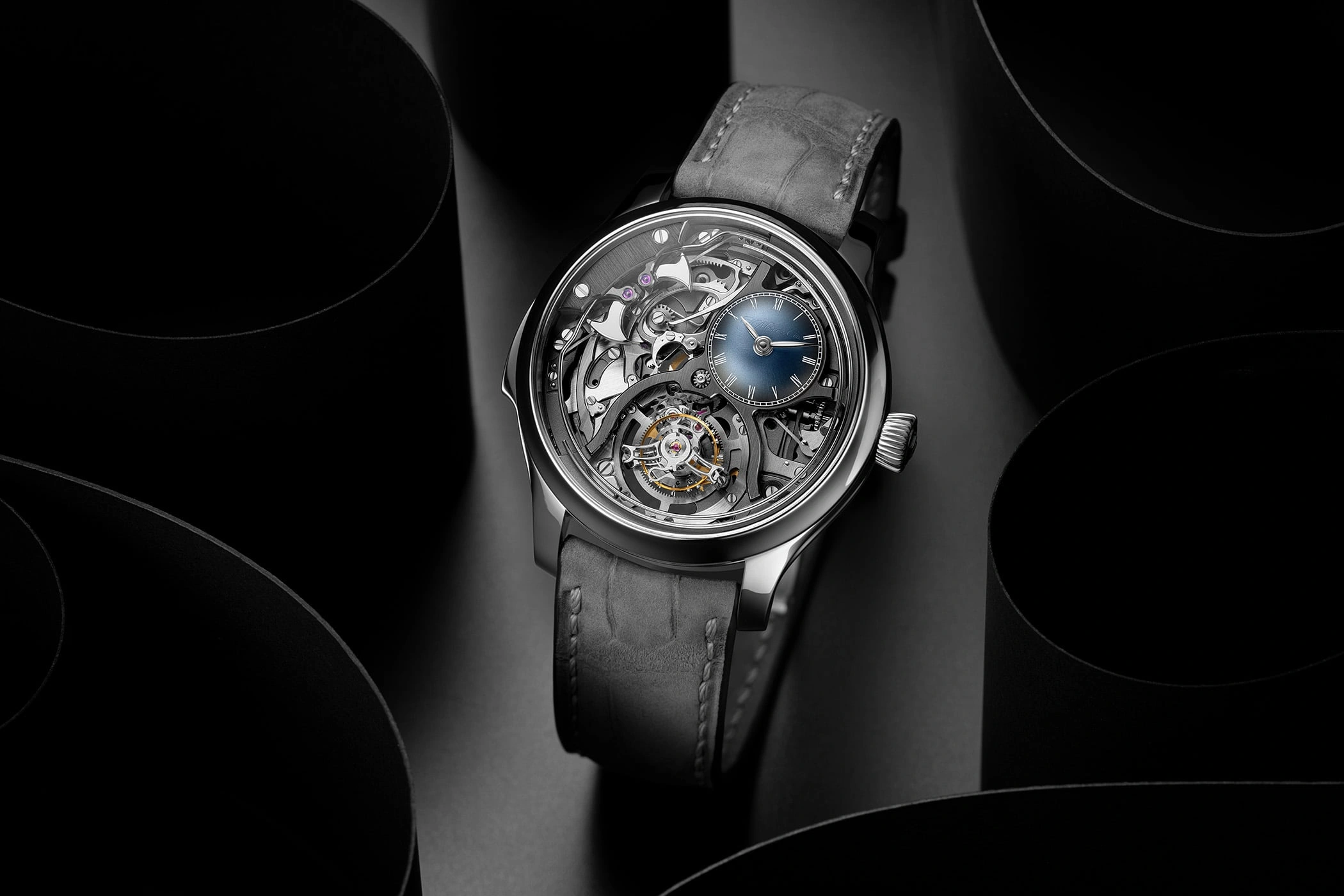
A watchmaking tour de force, minute repeater watches are elaborate, rare and extraordinary. Unlike conventional timepieces, minute repeater watches allow collectors to hear time chimed on demand.
The minute repeater mechanism is among the most complex and prestigious in watchmaking. Only a handful of watch brands can claim mastery of this noble complication combining precision, craftsmanship and artistry.
Revered for their melodious chimes on demand, minute repeater watches produce a multi-sensorial experience unlike any other.
What is a Minute Repeater?
In modern context, a minute repeater is a watch that chimes out the correct time in a sequence of sounds on demand.
The origins of the minute repeater can be traced back to the 17th century. A much different time when electricity had not yet begun playing its modern roles in powering homes and devices, populations depended on oil lamps and candles for light when night set in. A mechanism that could indicate time and be heard without relying on sources of light was therefore vital and convenient.
The need for practicality spurred the development of minute repeaters, with the earliest example made in the form of a table clock. The minute repeater clocks were first introduced in 1676 by Edward Barlow, using a rack and snail striking mechanism.
While clock towers striking the correct number of hours had been present in town centres for the ease of the townspeople, functioning as some sort of public service, the invention of the minute repeater table clocks and watches chiming the hours and quarters on request at any time transcended practicality – it made timekeeping personal.
Although the minute repeater mechanism has evolved and become even more intricate as miniaturisation set in, the underlying principle has changed little.
In general, the rack and snail mechanism is tasked to “read” time before activating the chimes, while the chiming mechanism consists of a set of hammers and gongs. The hammers strike the gongs to produce distinctive tones to indicate the hours, quarters and minutes.

Bulgari unveils the Octo Finissimo Minute Repeater 37mm - the world’s thinnest minute repeater at 6.85mm (Credit: Bulgari)
How Does a Minute Repeater Indicate Time?
The minute repeater mechanism is activated by the user via a push piece built into the watch case. This action triggers the minute repeater mechanism, producing a series of sounds in varying pitches.
The order starts with the number of hours indicated with single low-pitched chimes, the number of quarter-hours with dual high-and-low-pitched chimes, and lastly the number of minutes past the last quarter-hour with single high-pitched chimes.
For example, 7:47 is indicated with seven hour chimes, three quarter-hour chimes and two minute chimes. Conversely, 7:05 is indicated with seven hour chimes and five minute chimes, skipping the quarter-hour altogether as the time falls short of a quarter of an hour.
If it is 7:00, a minute repeater watch chimes only the number of hours. It is worth knowing that the maximum number of hour chimes is limited to 12. In short, the minute repeater’s striking mechanism does not differentiate between am and pm. 7 pm, or 1900 hours, will only be indicated with seven hour chimes.
Thanks to their intricate and complex nature, minute repeater watches are some of the finest timepieces ever produced, earning the coveted status as a grand complication.
A grand complication is considered the pinnacle of mechanical watchmaking. It is a romantic exhibition of craftsmanship and endeavour.

The Grande Double Sonnerie is the most complicated timepiece ever made by Blancpain (Credit: Blancpain)
How is a Decimal Repeater Different From a Minute Repeater?
An alternative to traditional minute repeaters is the decimal repeater watch, which chimes the hours, followed by tens of minutes, and the remaining single minutes. For example, 7:45 is indicated by seven hour chimes, four dual chimes in 10-minute intervals, and five single minute chimes.
Other exquisite chiming watches based on the concepts Grande Sonnerie and Petite Sonnerie are not considered minute repeaters by definition as they chime automatically rather than on demand.
The Grande Sonnerie chimes the hours and the quarters as time passes, while the Petite Sonnerie chimes the quarters only, skipping the hours unless it is the top of the hour. There are, however, examples of Grande Sonnerie and Petite Sonnerie watches also featuring minute repeater function. They are exceptionally rare.
For example, the Blancpain Grande Double Sonnerie features Grand and Petite Sonnerie, minute repeater, two selectable melodies, fully integrated retrograde perpetual calendar and flying tourbillon, with 1,053 components working in concert.
How Does a Minute Repeater Work?
The minute repeater mechanism requires complex execution, from the energy needed to set the mechanism into motion, to producing the exact sequence indicative of the time, to clarity and tonality.
The process involved in producing a minute repeater watch is comprehensive and uncompromising. Perfection is a requisite.
The core components making up the minute repeater complication include the hammers and gongs, the snails and racks, the all-or-nothing piece, and the governing mechanism.
If the minute repeater mechanism is a percussionist, the hammers are the drumsticks, the gongs are the snare drum and cymbal, the snails are the mind counting beats, while the racks are the arms holding the drumsticks. The all-or-nothing piece functions as a fail-safe, while the governing piece acts as the metronome.

The Parmigiani Fleurier Carillon Tourbillon 30th Anniversary features the unusual “serpentine” gongs (Credit: Parmigiani Fleurier)
The most visible part of the entire mechanism, the hammers and gongs work in concert to produce sound. The hammers are made of specific material or to specific density and size, while the gongs consist of elongated wires wrapped around the watch’s movement.
The hammers and gongs are articulated to desired shapes to dictate how they make contact as this action influences the pitch, tonality and resonance. Stainless steel makes a crisp, bright sound, while precious metals produce warmer and richer sound.
The larger hammer strikes a low-pitched gong, while the smaller hammer strikes a high-pitched gong. The watch case with its construction, size and materials also bears influence on the eventual pitch and volume of the chimes.
For example, the Parmigiani Fleurier Carillon Tourbillon 30th Anniversary features four gongs in the unusual “serpentine” shape to enhance resonance and produce four distinct notes. A low note for the hours, a high note for the minutes, and two additional tones for the quarters.
How Do Snails and Racks Work?
Snails are a set of rotating cams, while racks are toothed levers sweeping against their respective snails to “read” the exact time and trigger the hammers to strike.
They work in pairs: hours, quarters and minutes.
In total, the hour snail has 12 steps, the quarter snail has four steps, and the minute snail has 14 steps. When the minute repeater mechanism is activated, the respective racks drop their “beaks” onto the snails until they come to a halt on the corresponding steps, sending the hammers into striking motions and chiming the correct time.
What Does the All-Or-Nothing Piece Do?
The all-or-nothing piece ensures that the minute repeater mechanism completes its sequence of chimes and prevents partial or incomplete chimes, guaranteeing that the correct time is sounded every time.
What Does the Governing Piece Do?
The governing piece, or regulator, oversees the cadence of the striking mechanism. An even pace by spacing out intervals between individual strikes helps produce superior acoustics.
Too tight an interval, the gongs might still be vibrating from previous strikes and sounds could compete and cancel out each other, thus reducing the overall acoustic quality. Achieving the sweet spot is contingent on the sound judgement of a master watchmaker.
Why Are Minute Repeaters So Loved?

The spiral four-arm quarter snail as seen on the Parmigiani Fleurier Carillon Tourbillon 30th Anniversary (Credit: Parmigiani Fleurier)
Mechanical Complexity
The minute repeater watch is mechanical watchmaking at its finest. The nature of which it displays time transcends convention, blending horology with acoustics.
Its fine execution requires hundreds of components coming together flawlessly through precise engineering and painstakingly craftsmanship, from conceptualisation to manufacture, to assembly, to regulation, in order to bring vision to reality. The minute repeater watch is a work of art.
Acoustic Beauty
Not only does a minute repeater watch tell time by chiming, it inspires collectors through its finely calibrated acoustics. With its on-demand chiming mechanism, the minute repeater watch rewards with an immersion of sound. Like a miniature musical instrument made for the wrist, it allows timekeeping to be savoured.
Rarity and Exclusivity
The creation of a minute repeater watch demands total attention of a master watchmaker. Each timepiece requires immense, dedicated man-hours in craftsmanship, assembly and fine tuning, often taking many weeks to come into fruition.
Only select master watchmakers possess the requisite expertise and experience, which requires decades of practice, for this assignment.
This barrier makes the production of minute repeater watches labour intensive, costly and time consuming.
Historical Significance
Minute repeater watches represent the nexus of horological evolution, evoking the early development of watchmaking and epitomising the pinnacle of contemporary watchmaking. Thanks to this historical significance, they appeal especially to collectors who value heritage and meaning.
Artistic Expression
As each minute repeater watch is overwhelmingly handmade and overseen by a single master watchmaker, the timepieces exhibit subtle differences. Even among the same model, each timepiece emanates a slightly unique sound, making each one of a kind.
Each minute repeater watch bears the legacy of the master watchmaker who put it together. This distinction makes these exclusive timepieces highly sought after by seasoned collectors.
Hear the Art of Time
Minute repeater watches embody mechanical, aesthetic and acoustic brilliance. Thanks to this unique combination, minute repeater watches can be experienced with sight and sound.
They are like miniature musical boxes, delighting the senses and fostering emotional bonds. Highly coveted and exceedingly limited, minute repeater watches represent the acme of watchmaking and command veneration.
As a leading luxury watch retailer in Asia, Cortina Watch houses an exquisite selection of minute repeater watches made by Franck Muller, H. Moser & Cie., BOVET and Parmigiani Fleurier, and more. Experience the ultimate expression of time-telling artistry by getting in touch with us today.
Discover more brands with Cortina Watch online, visit us at our boutiques, or contact a sales representative today to learn more.
Related Insights
View All Insights-

- Cortina Curates
Metal Watches for Men: Built for Style, Strength and Longevity
25 Sep 2026
-

- Brand Spotlight
Why Watch Size Matters (But Not the Way You Think)
09 Sep 2026
-

- Curated by Cortina
Cortina Curates Local: The Art of Stillness by Taiwanese Glass Artist Chen Chien-Chih
04 Sep 2026
-

- News
Chronomaster Solo Sport: Distilling the Essence of High Frequency
02 Sep 2026
-
- News
The Navitimer That Became A Miles Davis Signature
02 Sep 2026
-

- News
Streamliner Tourbillon Skeleton Ceramic Alpine Limited Edition: A New Chapter, A New Material
02 Sep 2026