

- Interview
Builder of Time: Pascal Raffy, Owner and CEO of BOVET
05 Nov 2025

A flagbearer of exclusivity, craft, and human ingenuity since its founding in 1822, BOVET continues to lead the conversation on horological integrity
On the morning of our interview, Pascal Raffy, owner and CEO of BOVET, had just concluded a whirlwind series of engagements with watch collectors and business partners in Malaysia and Singapore. Within days, he would be en route to Thailand, and Taiwan for further market tours. His schedule, stretching into weeks without pause, would test the stamina of most. Yet there he was: bright-eyed, animated, and impeccably on a Monday morning, fielding questions about BOVET and eloquently championing the cause of authentic high horology.
The charismatic and statesman-like Raffy acquired the house of BOVET in 2001, a brand that was founded in 1822, in the Swiss Canton of Neuchâtel, by Edouard BOVET. Known for its lavishly decorated enamel pocket watches, the company bears a rich heritage in both artisanal and technical creations, with fame that even travelled as far as to China during the 19th century, where its timepieces were procured by the royalty of the Qing dynasty, with some still remaining housed today in the Forbidden City’s Palace Museum.
Today’s BOVET, though centuries removed from its beginnings, upholds ideals that transcend time and culture. Since 2006, BOVET has received over 60 international awards, including five at the Grand Prix d’Horlogerie de Genève (GPHG)—known as the Oscars of watchmaking—earning recognition from both its peers and watch collectors who admire the brand’s fiercely authentic and creatively spirited approach to luxury horology.
Legitimacy, exclusivity, craft, and creativity are values extolled daily by Raffy, who revitalised the maison with unrivalled passion and clarity of vision. A watch connoisseur and former lawyer, he set about re-establishing BOVET with the conviction that a true luxury watchmaking house must rest on firm foundations: a fully integrated manufacture, an authentic address—its headquarters and atelier are housed in the historic BOVET castle—and, most critically, a spirit that insists BOVET belongs among the highest echelons of fine watchmaking.
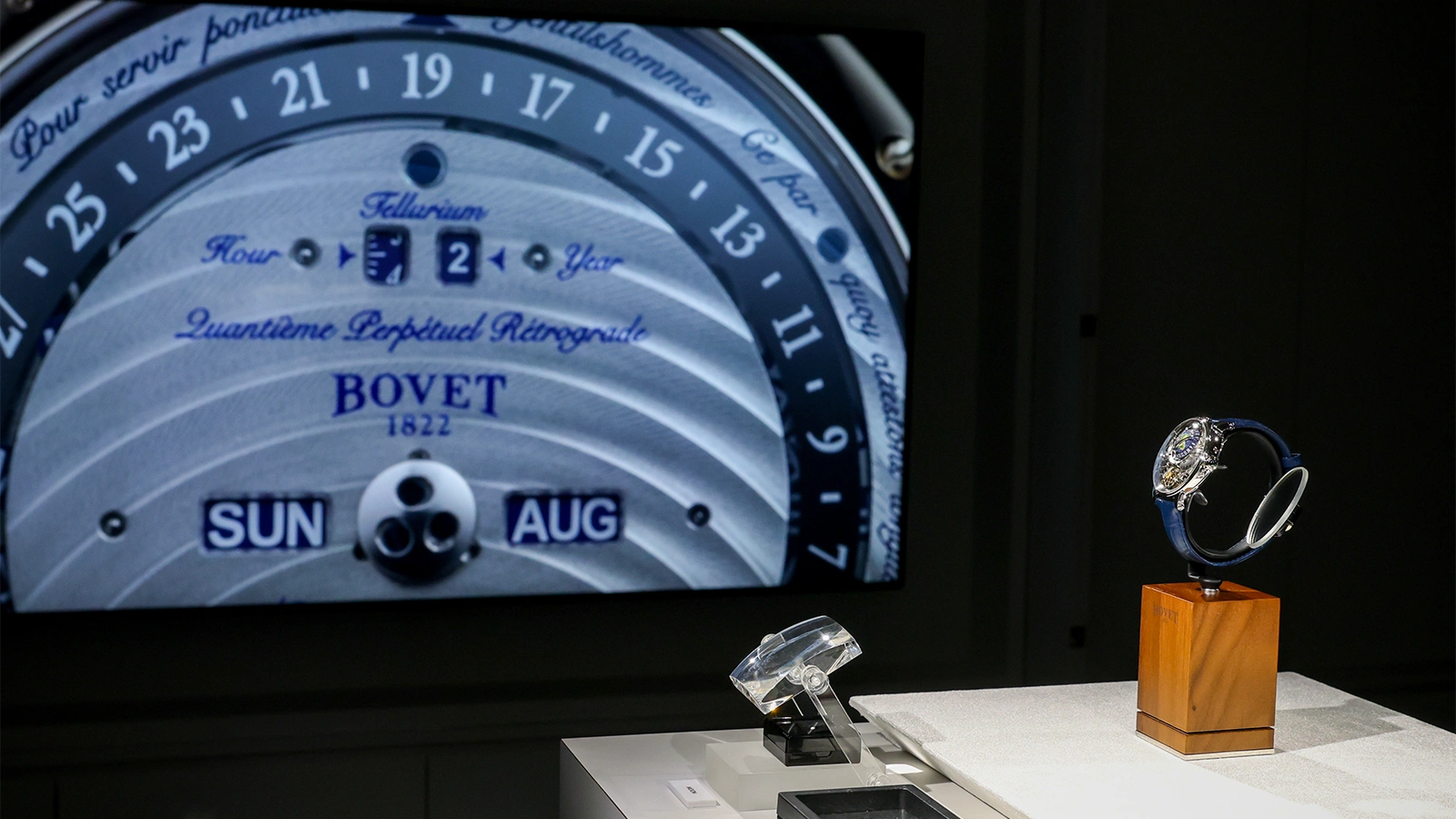
The event that BOVET staged across Asia-Pacific is called “Architecture of Time”. What does the term mean to BOVET?
We view time as being a great luxury. At the end of the day, what counts is what we’ve decided to do with the time that has been given to us. So, when we talk about the architecture of time, we are not just talking about the mechanics or aesthetics of a watch, but rather, about the true meaning of time.
What first ignited your passion for watches?
It was my grandfather who sparked my interest. I started learning watchmaking when I was about 13 and it went on for a few years. It was a bit boring at the beginning, I must admit, but soon enough I fell in love with it. To this day, I am fascinated by the craft—by how hundreds of tiny components can come together for something so beautiful.
You took over BOVET in 2001. What was the rebuilding process like for a brand with over 200 years of history?
It was important to look with respect at the history of the watchmaking house. Back in the 19th century, the founder already had the fantastic vision to bring horology from Switzerland to London and Guangzhou. So, we needed to understand the ethos of being open-minded to different cultures and habits.
You also have a sense of BOVET’s contribution to the history of watchmaking: from making the first watches with open casebacks, to patenting the first split-seconds chronograph, to the wealth of artisanal crafts that it championed, and so on. When we inherited all of that—the crafts, the mechanics, the innovation—the most important thing to do was not to disturb what makes the house of BOVET incredible.
What kind of foundations did you put in place?
Legitimacy. We needed to be based in the same castle that had belonged to the BOVET family since the 13th century. It was a legitimate address; not something invented. But what was missing in 2001 was a true manufacturing facility that was fully integrated, so that we would have the freedom to create, develop, engineer, and assemble truly magical timepieces. And that was what we set out to do then.
It must have been a big undertaking back then.
I was reminded recently that, after we established our Manufacture, BOVET was only one of three independent watchmaking houses at that time to have a fully integrated manufacturing facility. It is so important that we did that. We create luxury items, which means that what we produce has to be legitimate, exclusive in terms of quantity, and handmade.

How did you get the team to come onboard with your vision?
The team has been aligned right from the beginning. They are artisans, and making watches this way is exactly what they want. If I had told them that they needed to increase our production to 20,000 timepieces annually, they would have left. At BOVET, we are not interested in industrial production. We want to make beautiful watches with soul and meaning.
Tell us more about BOVET’s bespoke programme. Why is it important for the brand to offer this?
I am, first and foremost, a collector. When I enter a shop, I want to be served. I want to enjoy the experience, and I want to smile.
Our bespoke programme represents about 35 per cent of our yearly production, so you can see how important this is to us. On our end, we want to use this programme to perpetuate our art and tradition. When I look back to the history of BOVET, and our legacy in decorative horology—miniature painting, hand-engraving, enamelling, and all these wonderful techniques—I believe it is important to perpetuate this heritage. And because these are done by hand, and when the images or words mean something personal to you, the art becomes an emotional thing.
It is imperative for BOVET to have absolute freedom the creative process. Does being an independent brand make it easier or more challenging for you?
That’s the way we have always done it from day one. From the start of the process, the team is seated around the table, brainstorming and discussing ideas. I must admit, many times the team would say that an idea is impossible to achieve. But most times, we make the impossible possible—and that is what I love about the journey.
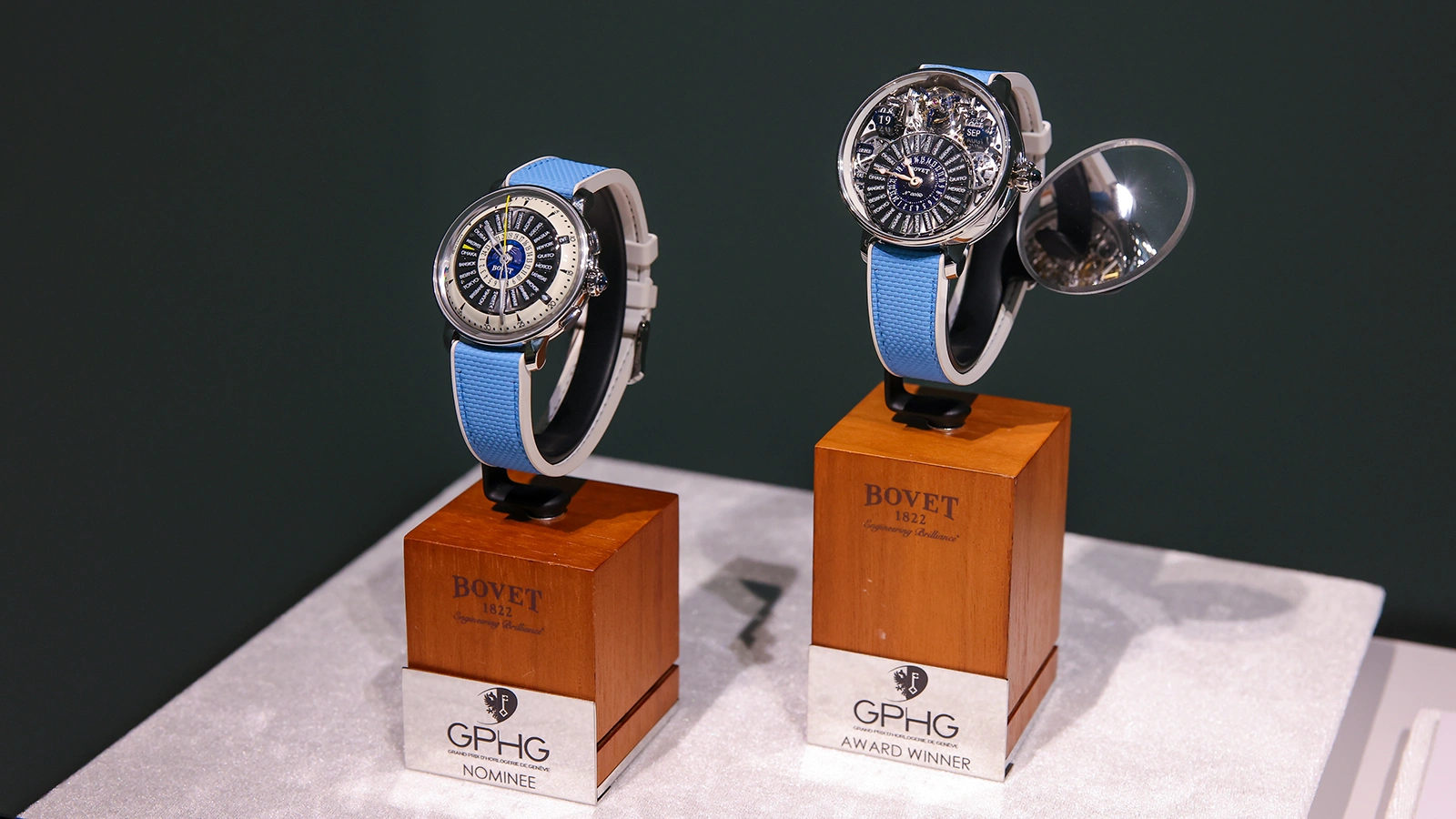
BOVET has recognised with many awards, including winning the Mechanical Exception Prize last year for the for the Récital 28 Prowess 1. Tell us about how innovative it is.
The watch solves the issue of displaying daylight savings time in the various time zones, which has been problematic for the longest time. The watch won the Mechanical Exception Prize at the Grand Prix d’Horlogerie de Genève (GPHG) 2025—and, I believe for good reason. It resolves the daylight savings time display with a complex roller system and, on top of that, it features a perpetual calendar with an isolator system, and a tourbillon in a newly designed cage. Again, if we are going back to the architectural theme, you get a sense of how we are building something valuable and meaningful.
What do these winning these awards mean to you?
To be honest, each time that happens, I just need to make sure that I heard it correctly before I walk to the stage. And each time, I look out to see my family and the team—you never think about yourself. Of course, you feel emotional and have a tremendous sense of pride. But the following day after you put the trophy on the shelf, it’s back to work.
Next year marks the 25th anniversary of your ownership of BOVET. What kind of legacy do you hope to leave behind?
I am already preparing for the future, and trying to stay ahead of the curve. At the same time, we want to do things step by step, constantly considering what is best for our collections, the designs, the innovations. All that I ask of the team is to be loyal to the House of Bovet, and to what it stands for.
Explore BOVET’s spectacular handcrafted complications at our boutique at Paragon today.
Related Insights
View All Insights-

- News
Franck Muller Celebrates The Art of Skeletonisation
22 Oct 2026
-

- News
Bell & Ross BR-03 Space Mission
20 Oct 2026
-

- Watch Knowledge
Motoring-Inspired Watches That Carry the Adrenaline Beyond the Track
09 Oct 2026
-

- News
Patek Philippe’s Gondolo Ladies First Jewelry Watches Offer A New Expression Of Feminine Refinement
05 Oct 2026
-

- News
H. Moser & Cie. Off Grid: The Digital Watch For Watchmaking Enthusiasts
29 Sep 2026
-

- Brand Spotlight
Blancpain Six Masterpieces
18 Sep 2026