

- Brand Spotlight
- Curated by Cortina
Taking Centrestage: Franck Muller Grand Central Tourbillon
09 Jan 2026
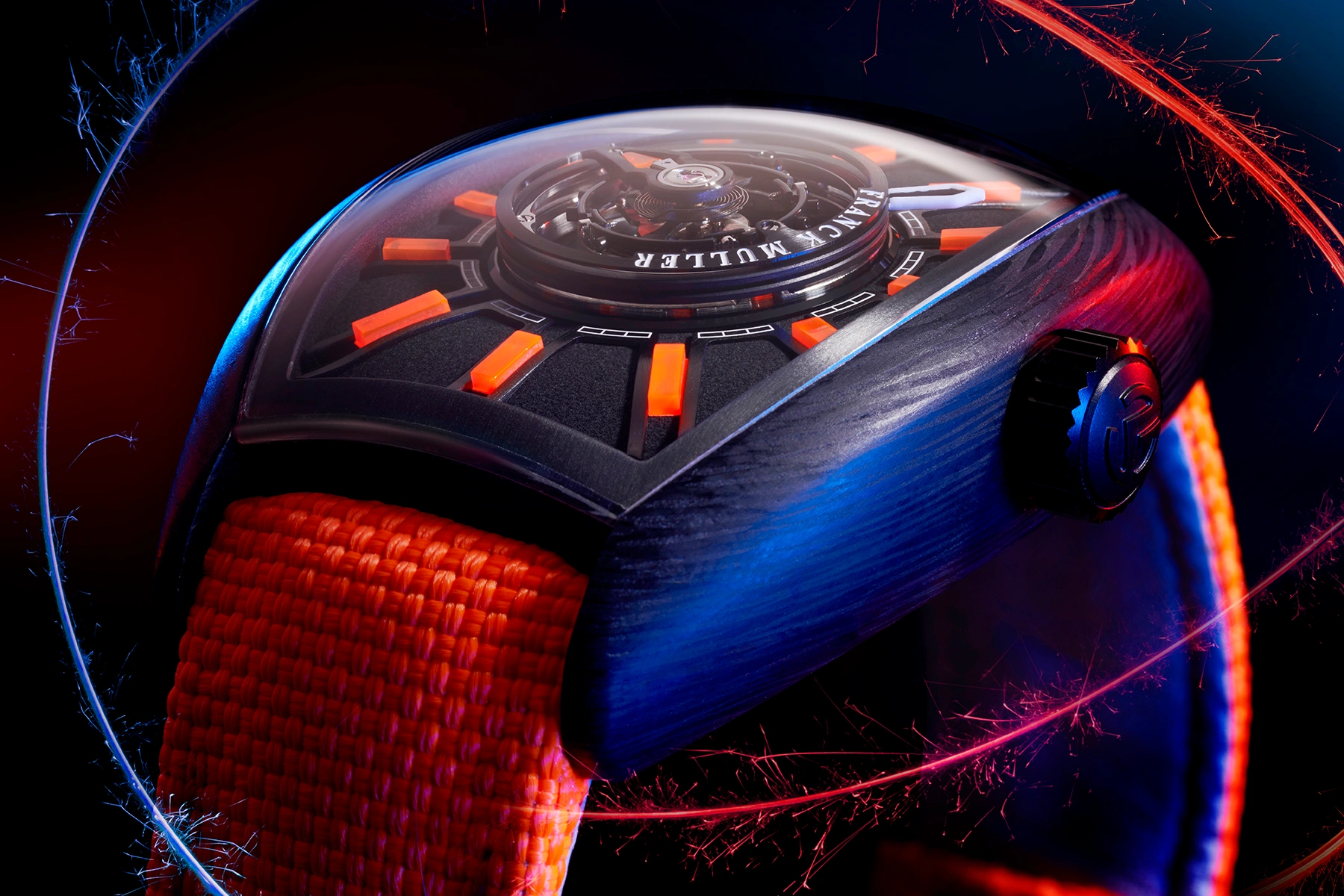
The shiniest star in Franck Muller’s cast of complications holds court with the Grand Central Tourbillon collection
It spins with a hypnotic calm, turning and pulsating while teasing its audience with a no-holds-barred parade of the very heartbeat of the timepiece. Yet, for all its dramatic flair, the tourbillon is no showboater. At its core, the mechanism is a feat of rigorous, utilitarian watchmaking. The rotating cage is engineered to counter the effects of gravity on a watch’s regulating organ, thereby improving the precision of mechanical timekeeping.
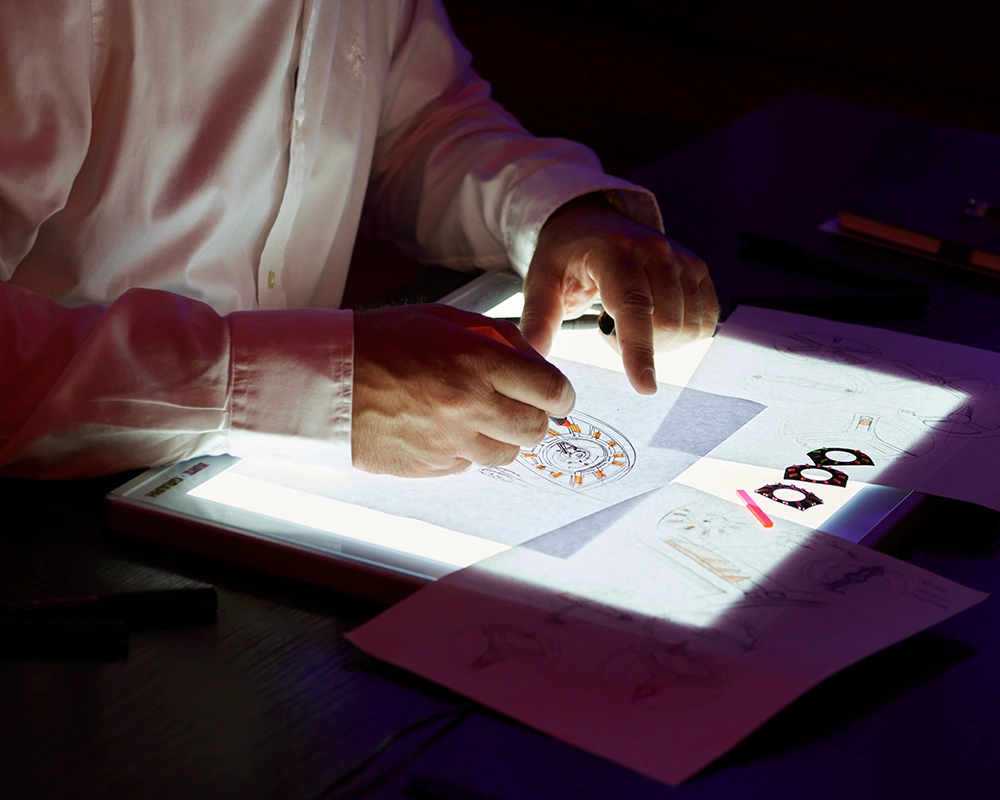
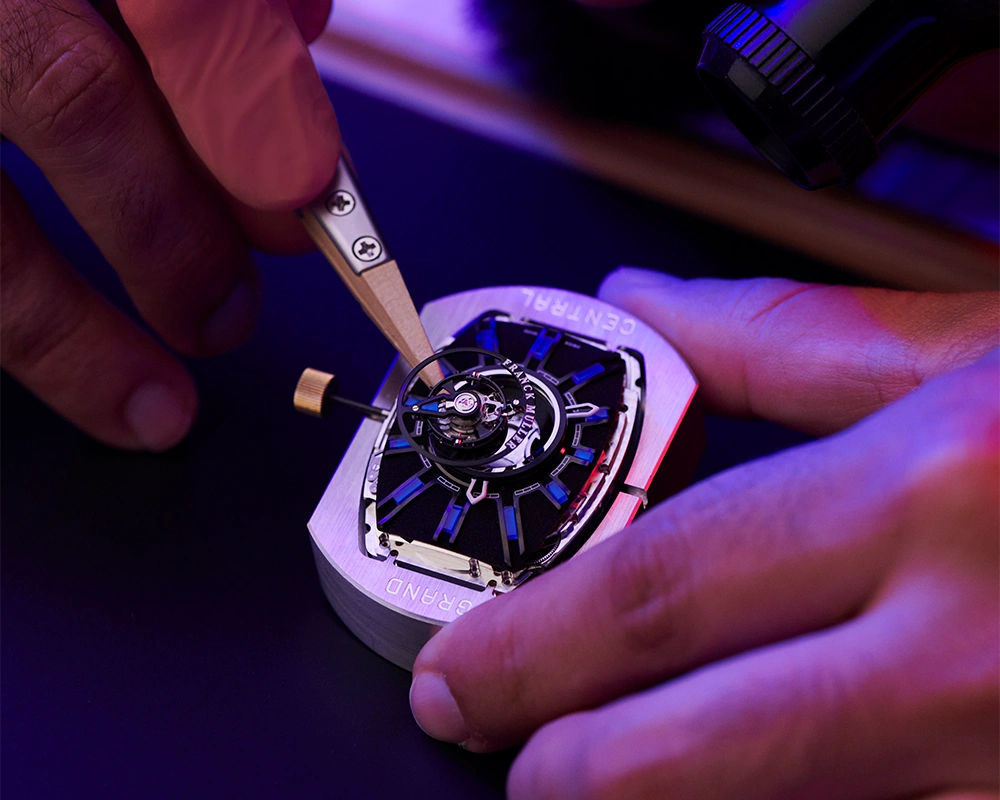
Yet, despite its origins dating back to 1801 and its enduring status among the most coveted of haute horlogerie feats, the tourbillon did not appear in wristwatches until the 1940s. Even then, it was only in the 1980s that the complication gained true prominence in contemporary watchmaking, largely due to the influence of Franck Muller, independent watchmaking’s self-styled ‘Master of Complications’, who cemented its collectability for a new generation of enthusiasts.
Franck Muller’s first World Premiere watch from 1986, featuring a tourbillon with jumping hours, marked a decisive shift. Recognising both its technical significance and visual impact, the watchmaker relocated the mechanism from the back of the watch to the dial side. The impact was immediate and enduring. With that deft move, Franck Muller drew renewed attention not only to the complication itself, but also to the broader craft of technical horology.


Centre Of Attraction
In the decades that followed, the brand continued to expand the boundaries of the tourbillon. In the early 2000s, the Revolution trilogy introduced multi-axis tourbillons housed in multiple rotating cages. The Aeternitas Mega 4 of 2007 raised the stakes further, combining 36 complications with a prominently displayed tourbillon at six o’clock. Franck Muller would go on to create the world’s largest tourbillon wristwatch with a 20mm cage in the Giga Tourbillon of 2011, as well as the world’s fastest tourbillon, Thunderbolt, whose cage completes a rotation every five seconds, twelve times faster than conventional tourbillons.
Despite its constant reimagining by Franck Muller, the tourbillon remains a deep well of inspiration. In 2021, the brand introduced yet another iteration which, much like its very first tourbillon from 1986, enthralled with deceptive simplicity. Instead of occupying its customary position at six o’clock, the tourbillon was relocated to the exact centre of the dial in the latest Grand Central Tourbillon.

Credit: Franck Muller
Compared with the brand’s more elaborate tourbillon creations, the Grand Central Tourbillon is restrained in both form and spirit. That said, it remains unmistakably Franck Muller, with layers of technical ingenuity beneath its composed exterior.
Positioning the tourbillon at the middle of the dial necessitated a complete rethinking of the movement’s architecture. Integrated into an automatic, tonneau-shaped calibre, the mechanism required the development of a bespoke micro-rotor, engineered to fit the movement’s proportions while delivering a four-day power reserve.

Credit: Franck Muller
Of course, all that technical effort bolsters the Grand Central Tourbillon‘s biggest attraction—its show-stopping drama. Like a kinetic sculpture suspended in space, the centrally positioned tourbillon can be appreciated from every angle. Anchored by a single lower bridge, it appears subtly elevated above the dial. Surrounding it, large open-worked discs bearing the hour and minute hands rotate steadily, their motion, together with the measured pace of the tourbillon, offering a quiet meditation on the passage of time.
The Grand Central Tourbillon was initially offered in three versions: two Cintrée Curvex cases measuring 40.16mm by 58.7mm and 36.5mm by 52.65mm, respectively, as well as a 45.3mm round case. Each expressed a balance of classical elegance and mechanical sophistication.

Credit: Franck Muller
Two years later, the brand switched it up—not unexpectedly—with the Grand Central Tourbillon Flash. Sheathed in neon livery, the Grand Central Tourbillon Flash is the kind of watch that one might feel compelled to brandish at club. A carbon case, paired with a blackened titanium bezel and a micro-blasted matte black brass dial, sets the stage for vivid highlights in neon orange, blue, or green across the hour markers, Super-LumiNova hands, and nylon straps. Unapologetically bold, it is a fitting expression of a complication that commands attention by design.
From its birth as a groundbreaking complication conceived for pocket watches, to its stature today as a mark of horological stature for both watchmakers and collectors, the tourbillon’s journey has seen it embrace both the technical and theatrical facets of fine watchmaking. And when placed on a pedestal, as Franck Muller does with the Grand Central Tourbillon, there is no doubt of the complication’s place in modern watchmaking.
Get up-close with the Franck Muller Grand Central Tourbillon collection at our boutiques today.
Related Insights
View All Insights-

- Curated by Cortina
Timeless Style: A Woman’s Guide to Elegant Watches for Formal Events
13 Jan 2026
-
- Brand Spotlight
- Curated by Cortina
Taking Centrestage: Franck Muller Grand Central Tourbillon
09 Jan 2026
-
- Brand Spotlight
- New Release
Gallop Into New Horizons and Master Every Second: Breitling Unveils Top Time B01 Shadow Rider
07 Jan 2026
-
- Brand Spotlight
Bell & Ross Becomes Official Timing Partner of Defender Rally
05 Jan 2026
-
- Curated by Cortina
- Watch Knowledge
What Is a Minute Repeater, And What Does It Do?
31 Dec 2025
-
- Brand Spotlight
- New Release
Glamour for Life’s Big Events – and Its Small Ones
29 Dec 2025