
- Watch Knowledge
The Essential Guide to Water Resistance in Watchmaking
04 Jul 2025
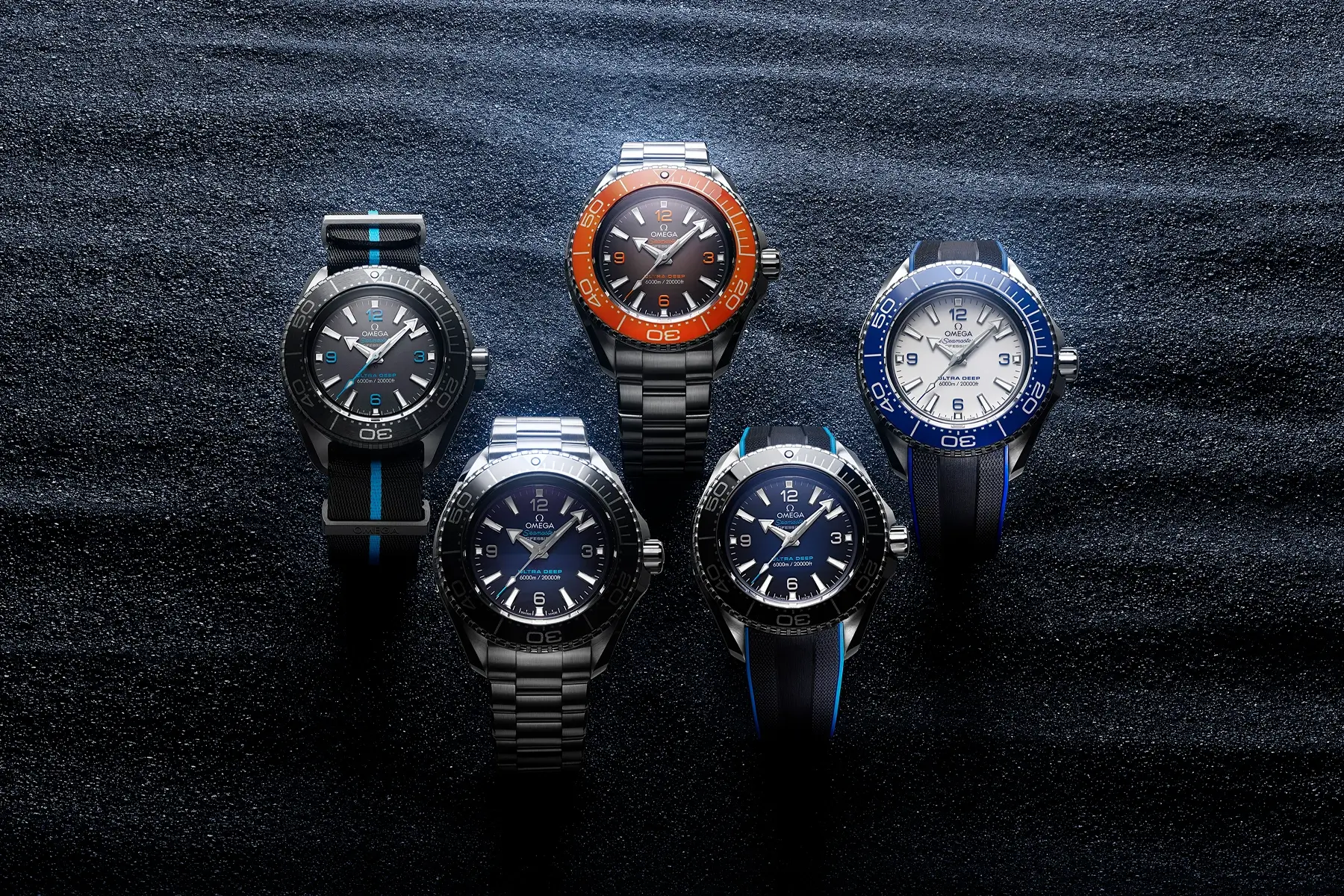
In the last decade, there have been a series of remarkable diving timepieces introduced by various watch brands, each setting incredible records for water resistance. It is a demonstration of how far the technology of sealing watch cases have come in over 170 years since W. Petit & Co. introduced the first waterproof timepiece, at the 1851 “Great Exhibition” held in the United Kingdom. At the exhibition, the silver-cased pocket watch was suspended in a bowl of water to demonstrate its ability to secure its contents from sea water and more.
Dennison, Waltham, and several other watchmakers began developing their own patents in the following decades. But it was really World War I when utility or tool watches introduced new ways of sealing the watch case against water exposure. This was a much needed innovation in underwater navy operations. By 1916, the first serially produced, water-resistant wristwatch was released by Waltham. A decade later, the Oyster case was launched by Rolex, with a secured caseback and crown.
A Transformative Moment

Blancpain’s Fifty Fathoms in 1953 offered a new way of sealing the watch case, thus creating the modern-day diving watch. (Credit: Blancpain)
In 1953, Jean-Jacques Fiechter, the Co-President of Blancpain, introduced a new watch with an innovative solution to a problem he experienced personally: an effective tool watch with a countdown function for diving operations. The idea occurred to him after his personal experience nearly running out of air when he was diving in the region of Cannes. To boost water resistance, the brand developed a double-sealed crown solution, adding a redundancy in case the crown was accidentally pulled underwater.

A depiction of the case construction from the patent application that Blancpain made to the US Patent and Trademark Office in 1954. (Credit: Blancpain)
An automatic movement ensured the seals would not be worn out by winding via the crown. The hacking seconds was useful to synchronise time in a group, and furthermore, Blancpain designed a case back with a channel designed to fit the rubber ‘O’-ring, supported by an additional metallic disc to fix its position. Fiechter’s invention came at the perfect time: Captain Robert Maloubier, founder of the French Combat Swimmers team, was looking for a utility watch that could do exactly what the Fifty Fathoms offered.

The Fifty Fathoms collection is split between the original design from 1953, with three case sizes today, and the Fifty Fathoms Bathyscaphe, a contemporary take on the diving watch. (Credit: Blancpain)
In developing the standards for a diving watch, Fiechter created a new watch category – the diving timepiece, which was the equal of the pilot and field watch, for utility in the air and land domains. Other specifications soon followed the original diving watch standard set by Blancpain.
For the Professionals

The OMEGA Seamaster Ploprof 1200M in O-Megasteel with blue gradient dial. (Credit: OMEGA)
In 1968, the COMEX diving organisation developed a hyperbaric chamber that could be used to test water resistance accurately. Various brands partnered with COMEX to develop solutions for deep water diving purposes, as submersibles designed to explore the deep blue were produced. OMEGA was one of the watch companies working towards this, and the result was the Seamaster Ploprof, short for Plongeurs Professionel, or Professional Divers.
The original Ploprof had a measured resistance to 600 metres of depth, and featured a large pusher locking system for the bezel. Most importantly, it had a fully monobloc case to simplify the protection against water penetration. Today, the Ploprof comes in O-Megasteel or titanium, and it has a depth rating of 1,200 metres. The titanium model has a mesh-style, shark-proof strap. In case of an attack, fling the Ploprof at the shark and swim away. Hopefully, it’s distracted by the movement of the watch and has its teeth trapped by the bracelet.

The Longines Super-Compressor Diver Ref. 7042 from 1960 featured a case developed by Piquerez with a double crown design. (Credit: Longines)
As diving became increasingly popular, case makers began to develop new ways of securing the case middle against water penetration. Mido used cork-sealed crowns and Longines worked with case maker, Piquerez, to create a nearly bezel-free round case with extruding glass and rotatable inner flange with minute track indication. This was locked in place using a second crown at 2 o’clock, while the winding and time-setting was via the crown at 4 o’clock. This design would become a standard for the brand’s Skin Diver models.

The TAG Heuer Monaco Ref. 1133B in stainless steel was the first waterproof watch case that was not round. It was equipped with the Calibre 11, TAG Heuer’s first automatic mechanical chronograph. (Credit: TAG Heuer)
Piquerez was also responsible for one of the biggest innovations in water resistance history. In the late ’60s, Erwin Piquerez collaborated with Jack Heuer to develop a statement-making watch case, to match Heuer’s pursuit of the automatic mechanical chronograph. The case maker’s success was exclusively offered to Heuer, and on March 3, 1969, the Monaco Ref. 1133B was presented at Baselworld with the Calibre 11 housed within.

The TAG Heuer Monaco Split-Seconds Chronograph F1 sets another milestone for the brand with its in-house rattrapante complication. (Credit: TAG Heuer)
The original Monaco had its crown on the left of the case, with pushers for the chronograph on the right. This configuration still exists in models today which pay tribute to the collection’s heritage. New releases such as the Monaco Split-Seconds Chronograph F1, have a standard configuration with the crown between chronograph pushers on the right. The split-seconds function is triggered by the additional pusher on the left of the case.
Testing Standards

The Montblanc Iced Sea 0 Oxygen Deep 4810 is another ultra-deep diving watch with a certified water resistance of 481 ATM. (Credit: Montblanc)
In 1990, the International Organisation for Standardisation (ISO) set guidelines for water-resistant timepieces, prohibiting ‘waterproof’ in official specifications. ISO 2281:1990 or its German DIN equivalent, 8310, specifies testing procedures that include overpressure, and resistance of the watch overall as well as operative parts.
Six years later, ISO 6425 became a standard for diving timepieces, and it remains the definitive standard for water resistance where watches must have a minimum of 100 metres and must offer water resistance of 125 percent of the stated value. For example, the Pelagos Ultra which TUDOR released at Watches and Wonders Geneva this April, will need to be tested for a water resistance of 1,250 metres in order to earn its rating. The requirement is a safety failproof designed to minimise the potential of equipment failure in critical moments.
Pushing the Numbers Game

The Bvlgari Aluminium watch has a seemingly invisible method of sealing the case back to ensure water resistance, with no visible screws used. (Credit: Bvlgari)
Just how is extreme water resistance achieved in watches? Each brand has its own take on it. Bvlgari’s Aluminium has a virtually invisible way of sealing the closed case back. They are not the only ones applying such a method, but there are others that have explored more unconventional solutions.
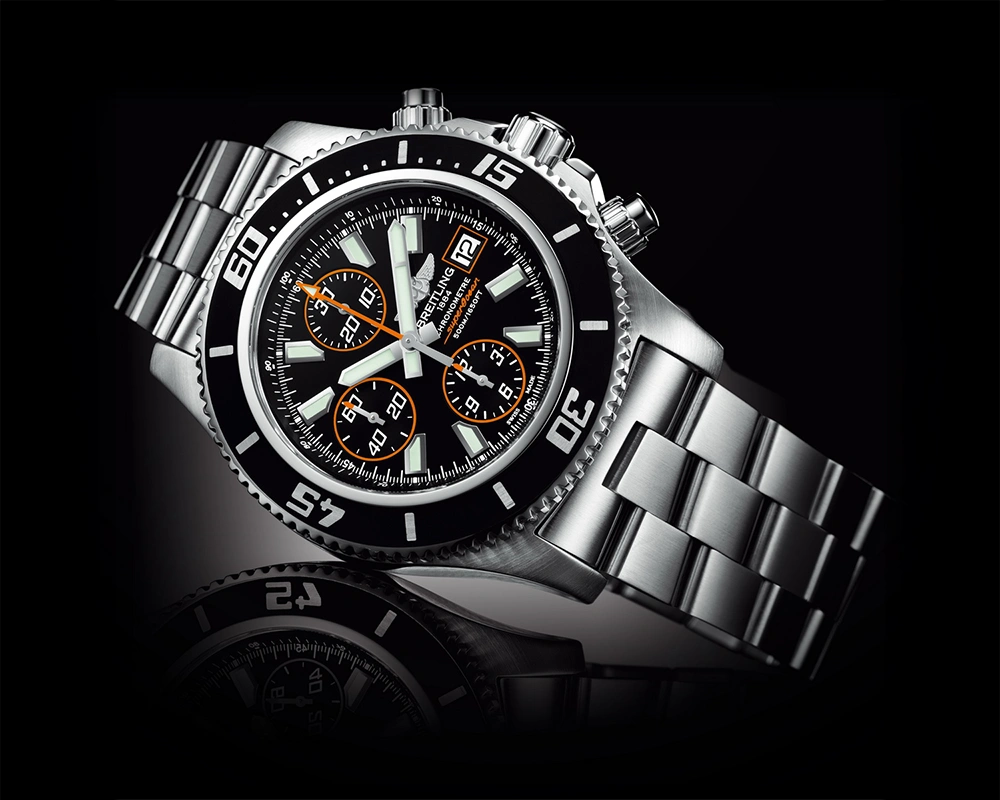
The Breitling Superocean Chronograph M2000 was one of the ultra-deep diving watches produced by the brand. (Credit: Breitling)
The pursuit of ultra-deep diving watches took off in the early eighties, with watchmakers like Breitling introducing their own version on the Superocean collection. The M2000 model had a very thick case design, in order to withstand the pressure the watch faced at great depths. These were intended for professional use, like its Navitimer models. They were not the only ones that were targeting professional audiences for high depth rating watches.

The Bell & Ross Hydromax Professional was a production timepiece with a water resistance rating of 11,000 metres, introduced in 1998. (Credit: Bell & Ross)
In fact, while early records were set by Rolex and OMEGA with the COMEX Expeditions, it was a French-owned watch brand that serially produced the diving watch with the highest depth rating back in 1998. Bell & Ross at the time were focusing on creating timepieces meant to survive extreme environments, to emphasise their durability for use by firefighters, underwater oil rig maintenance staff, and more. The Professional series had models for different terrains, and the Hydromax or Hydro Challenger featured a quartz watch with a water resistance of 11,000 metres.

The Grand Seiko 60th Anniversary Limited Edition combines the brand’s unique Spring Drive caliibre 9RA5 with the dive watch design, for precision and legibility. (Credit: Grand Seiko)
And even though Grand Seiko isn’t setting ultra-deep records, its professional diving watch uses corrosion-free titanium with the calibrre 9RA5. The 5-day power reserve of the movement, along with the Spring Drive mechanism’s renowned precision, makes this one of the most all-rounded diving watches today.
Making these watches work

At the time of writing, the OMEGA Seamaster Planet Ocean Ultra Deep Professional holds the record for the deepest dive ever made. (Credit: OMEGA)
Modern diving watches focus on slim builds and compact sizing, without compromising on water resistance and other factors. This is possible as technology has given us additional tools to build watches, from new case materials to rubber for the ‘O’ rings. There are also improvements in the machining of cases to create precise fits that can handle greater pressure.
If you are interested to find out more about how Cortina Watch tests watches for water resistance during servicing, or see watches rated with the highest water resistance, head to one of our boutiques to try them on.
Related Insights
View All Insights-

- Brand Spotlight
Why Watch Size Matters (But Not the Way You Think)
09 Sep 2026
-

- Curated by Cortina
Cortina Curates Local: The Art of Stillness by Taiwanese Glass Artist Chen Chien-Chih
04 Sep 2026
-

- News
Chronomaster Solo Sport: Distilling the Essence of High Frequency
02 Sep 2026
-
- News
The Navitimer That Became A Miles Davis Signature
02 Sep 2026
-

- News
Streamliner Tourbillon Skeleton Ceramic Alpine Limited Edition: A New Chapter, A New Material
02 Sep 2026
-

- News
TAG Heuer Monza Flyback Chronograph: Fifty Years on the Racing Line
01 Sep 2026