
- 时计知识
Beyond the Surface: The Brilliant Attributes and Advantages of Sapphire Crystals
本文出自: Justin Ng
2026年6月15日
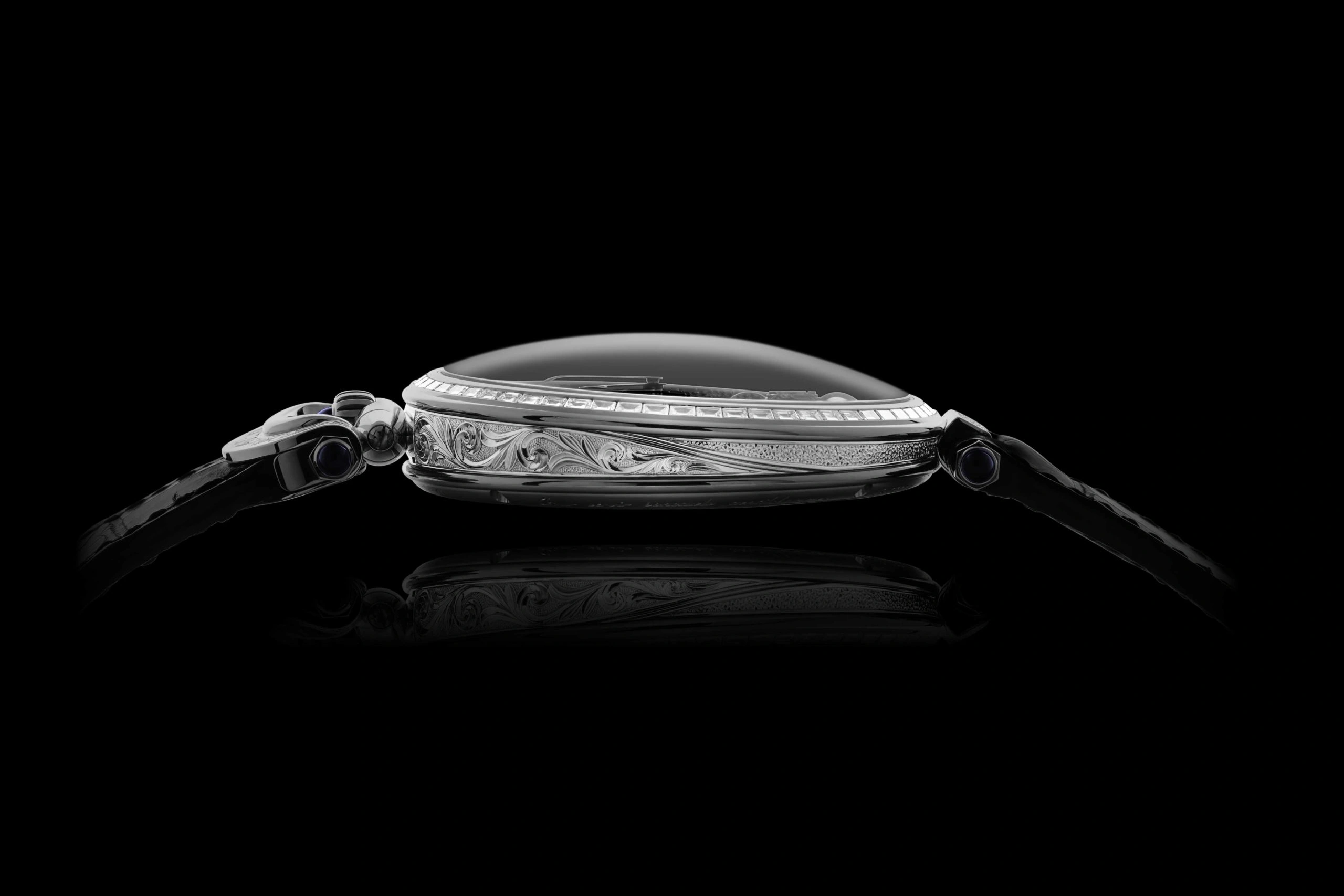
An indispensable material in the make-up of modern luxury watches, sapphire crystals are often spoken little about.
The Brilliance of Sapphire Crystals
Providing more than just a roof, sapphire crystals invite admiration into the watch’s architecture and craftsmanship. They represent the first visual touch point between collectors and their watches.
Sapphire crystals also possess transformative power, helping watches with striking characteristics come to life.
What are Sapphire Crystals?
Clear as glass, sapphire crystals are inherently tough. Rated 9 on the Mohs scale developed by Friedrich Mohs to rate mineral hardness, this synthetic material is inspired by natural-occurring sapphire. Sapphire crystals are commonly considered the hardest mineral, second only to diamonds.
Only materials rated equal or harder than sapphire crystals can inflict cosmetic blemishes. By comparison, diamonds score a perfect 10 on the Mohs scale and are regarded as the benchmark.
Exceptionally scratch resistant, this remarkable ability makes sapphire crystals the ideal protective glass for watch dials and transparent casebacks.
Natural sapphire consists of aluminium oxide with trace amounts of other elements. From colourless to rare colours, sapphires occur in a spectrum of brilliant colours. The stunning red sapphire is better known as a ruby.
Natural coloured sapphires are cherished for their aesthetic values. They are set on high-jewellery watches, arranged in a rainbow of colours and sorted into desired shapes like baguette cut and brilliant cut. On the other hand, synthetic sapphire, commonly known as sapphire crystals, or sapphire glass, is used for practical purposes such as to enhance clarity and durability.
The History of Sapphire Crystals in Watchmaking

The OMEGA Speedmaster Moonwatch Professional is offered in versions fitted with sapphire crystals and Hesalite (Credit: OMEGA)
Sapphire crystals are not to be mistaken for natural sapphire. Synthetic sapphire has been used in watchmaking in one form or another as early as the start of the 20th century.
Announcing his discovery in 1902, French chemist Auguste Victor Louis Verneuil found a commercially viable way of making synthetic gemstones, paving the way for synthetic rubies and sapphires to replace natural jewels as friction-reducing ball bearings. It is customary for watchmakers to indicate the number of jewels used in a movement.
The Verneuil method involves aluminum oxide powder heated to extreme temperatures of over 2,000°C, transforming this powder into a molten state before it cools down and crystallises into a solid boule. This rough sapphire crystal is then cut and polished using diamond-tipped tools into desired shapes.
A small number of watches featuring sapphire crystals as the glass of choice began to surface from the 1930s. This development continued at a gradual pace until the 1970s when sapphire crystals became de rigueur. They overtook acrylic and mineral glass – alternatives that have largely fallen out of favour in luxury watchmaking.
Sapphire crystals are substantially harder than quartz and silica, the primary constituent of sand. While sand can inflict scratches on prevalent watch alloys such as stainless steel, titanium and 18K gold, its abrasiveness does not have material effects on sapphire crystals.
Sapphire crystals are therefore excellent materials to provide enhanced scratch resistance to the elements and keep the watch face in pristine condition for a very long time.
The Many Ways Sapphire Crystals are Used in Watchmaking

Franck Muller offers a bold take on sapphire crystals with the Vanguard Aero Revolution 3 Skeleton. (Credit: Franck Muller)
Sapphire crystals are used in a number of ways in watchmaking. They occupy the front of the watch, shielding the dial from knocks, as well as elements such as water, dust and UV rays. This versatility and durability has earned sapphire crystals their place among other cutting-edge materials in the list of components trusted in the construction of a luxury watch.
Alongside its widespread acceptance, sapphire crystals have been the subject of many experiments and interpretations. Innovative use beyond protecting the dial and caseback is explored by ingenious watchmakers. Efforts include cutting sapphire crystals into various shapes with purpose and vision in mind.
Enhancing Durability and Water Resistance
A balancing act between weight and thickness, watchmakers carefully select respective sapphire crystals for their watches based on their purposes. Professional watches with high water resistance ratings feature thicker sapphire crystals, while dress watches feature slimmer sapphire crystals, balancing durability with weight, dimension and elegance.
Shaping Aesthetics
Sapphire crystals can impart personality to a watch based on how they are shaped. Domed sapphire crystals can produce magnification. Greater curvatures offer playful optical distortion when seen from an angle, with light refraction prompting fascination.
Select watch brands take advantage of this idiocracy. Rather than disavowing distortion or magnification, they embrace the exaggerated effects, such as magnification on the date aperture, enabling the numbers to be read effortlessly.
Some watchmakers prefer boxed sapphire crystals. When the flat-top sapphire crystal is fitted over the watch’s bezel, the raised edges evoke an acrylic-like, vintage sensation, without inheriting any of the latter’s drawbacks. This box-style crystal sapphire minimises distortion while elevating visual appeal.

The TAG Heuer Monaco Split-Seconds Chronograph features a flat-top sapphire crystal (Credit: TAG Heuer)
Introducing Colours and Gradients
While sapphire crystals are typically colourless, watchmakers have discovered new ways of working with this transparent material. By introducing various trace elements into their crystal structure, sapphire crystals can take on different colours, imitating the many hues natural sapphires are found.
Technological advancement has also helped watchmakers to cut sapphire crystals into various shapes, bringing ambitious ideas such as whole sapphire crystal watch cases to reality. Others combine laser ablation with sapphire crystals to create interesting gradients and etchings in avant-garde watches.
These innovative approaches help sapphire crystals outgrow the established reputation as protective glass for dials and broaden their repertoire within watchmaking aesthetics and function.
How Durable are Sapphire Crystals?
Scratch Resistance
Alternatives to sapphire crystals such as acrylic and mineral glass are rated lower on the Mohs scale, hence they are more prone to scratches. It is no surprise that sapphire crystals have largely supplanted these softer materials as the protective glass in luxury watchmaking. There are exceptional cases where acrylic glass is preferred, usually limited to re-issued watches on the account of historical accuracy.
Sapphire crystals, however, are not completely scratch proof. Considered the hardest natural mineral, diamonds can inflict serious scratches when rubbed against sapphire crystals. Collectors should exercise caution when wearing diamond-studded accessories alongside their watches.
Clarity
Thanks to its exceptional scratch resistance, sapphire crystals guarantee crystal-clear clarity and long-lasting brilliance without developing opacity or stain due to mineral build-up and reactions to UV radiation.
In order to minimise light from reflecting back from the dial onto the underside of the sapphire crystal, leading to unpleasant reflection and glare, sapphire crystals are finished with anti-reflective (AR) coating. AR coating is produced using the physical vapour deposition (PVD) process. This is typically applied to the underside of sapphire crystals to prevent the softer AR coating from developing scratch marks, thus undermining the clarity of the sapphire crystals.
Watches should be kept in reasonable care to prevent moisture and condensation from building up inside the watch. The tell-tale sign is when the sapphire crystal fogs up. Causes include compromised water resistance, loose crowns and worn seals. This situation can be remedied with immediate servicing.
Impact Resistance
While sapphire crystals are exceptionally durable, under very rare circumstances, they could crack or shatter. This can happen when sapphire crystals are subject to incredible impact or intense pressure beyond what they can withstand.
However, collectors should not be alarmed as watchmakers take serious consideration when fitting sapphire crystals of appropriate thickness for watches intended for their purposes.
Tool watches and dive watches boasting high water resistance feature thicker sapphire crystals to ensure they remain functional and reliable in challenging conditions.
Long-Term Value
The long-term value of a watch is contingent on several variables, including its condition. Sapphire crystals are among the contributors in keeping the watch “mint”, thus preserving its resale value. This is an important consideration for collectors looking to move their watches on.
Watch Brands Utilizing Sapphire Crystals

Sapphire crystals support the water resistance and legibility of the Blancpain Fifty Fathoms Automatique 42mm (Credit: Blancpain)
Blancpain
A pioneer in deep sea diving, Blancpain is a trusted partner in maritime exploration. In a sea of dive watches, the Fifty Fathoms collection stands apart for its proven reputation and distinctive aesthetics.
Widely considered the world’s first purpose-built professional dive watch, it benefits from Blancpain’s legacy as the oldest watch brand in business and steadfast commitment to watchmaking innovation. Sapphire crystals deliver water resistance, durability and legibility underwater where the environment is unpredictable, ensuring the enduring qualities of the Fifty Fathoms watches prevail through time.

The Cartier Roadster’s unique date magnifier is made possible by sapphire crystals (Credit: Cartier)
Cartier
A prolific creator of iconic watches, Cartier has shaped watch trends and styles for generations. Among its catalogue of exemplary watches is the Roadster. In 2026, Cartier reintroduced this iconic watch, known for its date magnifier in the shape of a headlight, to a new generation of collectors.
Highlighting a speedometer-inspired dial and conical crown, the Roaster is a watch unlike any other. Its date magnifier brings not only legibility and performance; it is an identity. The watch’s ergonomic design is made possible by Cartier’s mastery of sapphire crystals. It demonstrates that sapphire crystals offer more than just protection, enabling icons to be born.

The allure of the Parmigiani Fleurier TONDA PF GMT Rattrapante Verzasca Green is bolstered with the clarity of its sapphire crystal (Credit: Parmigiani Fleurier)
Parmigiani Fleurier
Inspired by geometry and the golden ratio, Parmigiani Fleurier watches feature timeless designs and sophisticated in-house movements. Sapphire crystals are essential to showcasing the brand’s extraordinary craftsmanship and textural architecture.
The Grain d’Orge dial, a signature hand-guilloché pattern resembling the ear of barley, redefines modern elegance while staying true to Swiss watchmaking.
Sapphire crystals enable the complexity and elegance of the dial to be appreciated up close.

The distinctive Bell & Ross BR-X3 Micro-Rotor features sapphire crystal case front and back, and breathtaking transparency (Credit: Bell & Ross)
Bell & Ross
With a design precept influenced by the chronometric and aeronautical instruments exclusive to cutting-edge race cars and aircraft, sapphire crystals play an instrumental role in emboldening Bell & Ross’ aesthetics. This robust material is selected deliberately to enhance legibility and durability in the brand’s watches. Used in conjunction with proven materials such as ceramic, titanium and carbon fibre, sapphire crystals provide optimal protection to these watches.
Known for its design ingenuity and watchmaking innovation, Bell & Ross introduced the distinctive Bell & Ross BR-X3 Micro-Rotor encased in sapphire crystals and stainless steel. Underlining the versatility of sapphire crystals and Bell & Ross’ distinctive aesthetics, this limited edition combines transparency and the utmost technical and structural refinement. The result is a stunning exhibition of fine watchmaking.

The Breitling Chronomat houses a recessed domed sapphire crystal for added protection from accidental knocks (Credit: Breitling)
Breitling
A pioneer in aviation watches and chronographs, Breitling boasts an extraordinary legacy in defining quality, design and performance in watchmaking. It is among the earliest adopters and advocates of sapphire crystals, with its iconic range of watches featuring sapphire crystals as early as the 1970s and 1980s.
Today Breitling watches are equipped with modern movements and all of its watches are Chronometer certified by the Contrôle Officiel Suisse des Chronomètres (COSC). Breitling showcases its leading in-house movements with the introduction of transparent casebacks, at once revealing their architecture and craftsmanship without compromising on their integrity. This spirit of innovation and excellence ensures Breitling remains at the forefront of watchmaking evolution.
Sapphire Crystals: The Clear Choice for Enduring Beauty
Sapphire crystals provide unmatched durability and clarity as the protective shields of watch dials and movements. Beneath their discreet appearance lies great importance as sapphire crystals guarantee luxury watches of their enduring aesthetics, qualities and reliability – and, ultimately, their long-term values.
As a leading luxury watch retailer in Asia, Cortina Watch is home to an expansive collection of fine watches across a range of styles, purposes and sizes. All of which feature sapphire crystals as the ideal materials. Secure an appointment with us today and be captivated by the brilliance of sapphire crystal-integrated luxury watches.
Discover more brands with Cortina Watch online, visit us at our boutiques, or contact a sales representative today to learn more.
观点推荐
阅读所有观点-

- 品牌焦点
Why Watch Size Matters (But Not the Way You Think)
2026年9月9日
-

- 高登精选
Cortina Curates Local: 與玻璃藝術家陳建志共譜中秋琉光故事
2026年9月4日
-

- 新闻
Chronomaster Solo Sport: Distilling the Essence of High Frequency
2026年9月2日
-
- 新闻
The Navitimer That Became A Miles Davis Signature
2026年9月2日
-

- 新闻
Streamliner Tourbillon Skeleton Ceramic Alpine Limited Edition: A New Chapter, A New Material
2026年9月2日
-

- 新闻
TAG Heuer Monza Flyback Chronograph: Fifty Years on the Racing Line
2026年9月1日