

- Cortina Curates
Watches and Wonders Geneva 2026: Five Standout Novelties That Defined the Fair
Written by: Allyson Klass
20 Apr 2026
From stealthy black ceramic and a skeleton chronograph to a world-first invisible complication and raw-metal minimalism, this second wave of releases shows watchmaking at its most innovative and inventive.
If the first round-up of standout launches from Watches and Wonders Geneva 2026 set the tone, this second instalment shows just how broad and confident the fair’s output really was. This year’s edition drew nearly 60,000 unique visitors, welcomed 1,750 journalists and 6,000 retailers, while ticket sales across the three public days rose to 25,000. And with close to 1 billion people reached globally – up 29% from 2025 – it also underscored how far the event has grown beyond traditional watch circles.
That momentum carried through to the watches, as seen in these five impressive references. TAG Heuer completely reworked the fundamental construction of the chronograph after five years of development. H. Moser & Cie. delivered a pared-back perpetual calendar in raw tantalum, free of logo and indices. TUDOR went fully dark with a dive watch rendered in black ceramic, right down to the bracelet. Zenith opened up its famed El Primero movement in a skeletonised new model. And Parmigiani Fleurier unveiled the world’s first hidden chronograph complication that reveals itself on demand.
Collectively, they show modern horology to be one of the most inventive corners of luxury today – restless, innovative and fearless in challenging its own conventions.

Credit: H. Moser & Cie.
H. Moser & Cie. Endeavour Perpetual Calendar Concept Tantalum
It takes a certain kind of audacity and confidence to make a perpetual calendar without a logo, indices or surface treatment on the dial. That’s precisely what H. Moser & Cie. has done here. Limited to just 50 pieces, the Endeavour Perpetual Calendar Concept Tantalum one of the most quietly radical watches to come out of Watches and Wonders 2026.
Tantalum is an unusual and unexpected choice of metal. Discovered in 1802, it’s dense, hard and ductile, with a melting point close to 3,000°C that demands advanced metallurgical expertise to work with. What makes it visually compelling is its dark grey hue with subtle bluish reflections that shift with the light and unlike most watchmaking materials, it develops a natural protective oxide layer when exposed to air, which means it never tarnishes. Here, Moser has used it not just for the 42mm case, but the dial as well, machined from solid tantalum and finished with a brushed sunburst pattern applied directly to the metal. With no lacquer or varnish, the result is raw and the dial is a living surface instead of a decorated one.
The stark timepiece features an instantaneous jumping big date and central hand for the month as the only indications beyond the time itself. The perpetual calendar beneath is characteristically Moser — adjustable forwards and backwards at any time of day via the crown. The in-house HMC 800 hand-wound movement – with 294 components and a seven-day power reserve via a double barrel – manages a complication of genuine complexity with an operation that feels effortless.

Credit: TUDOR
TUDOR Black Bay Ceramic
The Black Bay Ceramic has been part of TUDOR’s line-up since 2021 and this new iteration takes the watch’s sleek aesthetic one step further. The addition of a fully ceramic bracelet – newly engineered by TUDOR – completes what is now an entirely blacked-out package, from the matte black microblasted case to the charcoal sunray dial. The Snowflake hands, a TUDOR signature since 1969, are rendered in dark luminescent material that glows green in the dark. Even the bezel graduations are engraved in matching dark tones, catching light differently at different angles without breaking the alluring monochromatic theme.
Building a ceramic bracelet is considerably more demanding than working with steel. The material is hard and brittle, which makes shaping and machining ergonomic links with clean finishing a technical challenge. The result here is a three-link bracelet that’s secured with a proprietary dual-folding clasp also forged in ceramic.
The watch is powered by the manufacture calibre MT5602-U that boasts dual certification: COSC chronometer status and METAS Master Chronometer, the latter requiring the watch to function within a 0/+5 second daily tolerance, remain accurate through magnetic fields of up to 15,000 gauss and deliver a 70-hour power reserve. That final point is worth noting – TUDOR describes it as weekend-proof, meaning the watch can be taken off on Friday evening and worn on Monday morning without the need to wind it.

Credit: Zenith
Zenith Chronomaster Sport Skeleton
The El Primero has been the backbone of Zenith’s identity since 1969, when it became the world’s first automatic, integrated high-frequency chronograph. More than 50 years on, the architecture remains essentially intact and with the Chronomaster Sport Skeleton, the Swiss watchmaker has opened it up entirely for the first time in this format.
The sapphire dial fades from black at the periphery to fully transparent at the centre, revealing the skeletonised El Primero 3600 SK beneath. The signature tri-colour overlapping counters in grey, anthracite and blue are a direct nod to the original 1969 calibre, while the column wheel, finished in blue, is now clearly visible via the dial and caseback. Operating at 5Hz and 36,000 vibrations per hour, the movement measures 1/10th of a second as a direct mechanical consequence of its high frequency. The central chronograph hand completes one full rotation every 10 seconds, read against the 10-second graduated ceramic bezel. A silicon escape wheel enhances precision and durability. Despite its high-frequency operation, the movement delivers a 60-hour power reserve.
Also making its debut is the Zenclasp, a new patented folding clasp that took three years to develop. Its 41 components include 10 ceramic balls that govern the locking and positioning functions, which allow the bracelet to be adjusted on the wrist without tools in 2.5mm increments across a total range of 10mm. Durability was validated across 600,000 opening and closing cycles – the equivalent of more than 10 years of daily use.
The Chronomaster Sport Skeleton is offered in four references: two in stainless steel with black or green ceramic bezels, one in rose gold with a rubber strap and a 10-piece limited edition in rose gold with a bezel set with 52 baguette-cut diamonds.

Credit: TAG Heuer
TAG Heuer Monaco Evergraph
Watchmaking milestones are usually incremental – a new material here, a refined complication there – but the TAG Heuer Monaco Evergraph is something else entirely. Built around a mechanism that did not previously exist, it emerged from five years of development at the TAG Heuer LAB in response to a question the industry had never really asked: What if a chronograph no longer needed levers and springs?
The answer is the Calibre TH80-00. Virtually all the levers and springs traditionally associated with the chronograph function have been replaced with two flexible bistable nickel alloy blades – one governing start and stop, the other reset – manufactured using high-precision LIGA technology. The innovative design eliminates the friction-induced wear that accumulates in traditional chronograph construction. Whether on the first pusher press or the 10,000th, the sensation and accuracy remain identical. Developed in partnership with renowned movement specialist Vaucher Manufacture Fleurier, the calibre is COSC-certified, magnetically resistant, operates at 5Hz and delivers a 70-hour power reserve.
It’s fitting that this mechanism lives within the Monaco, the watch that made history in 1969 as the world’s first square, water-resistant automatic chronograph. The 40mm Grade 5 titanium case traces its silhouette back to that original reference 1133, with a transparent dial that gives the indications an almost suspended quality alongside sharp facets along the case edges that lend a monolithic, brutalist presence on the wrist. The timepiece is available in titanium with blue accents, which is a nod to the Steve McQueen-era reference 1133B, and black DLC-coated titanium with red accents that draw from TAG Heuer’s motorsport heritage.

Credit: Parmigiani Fleurier
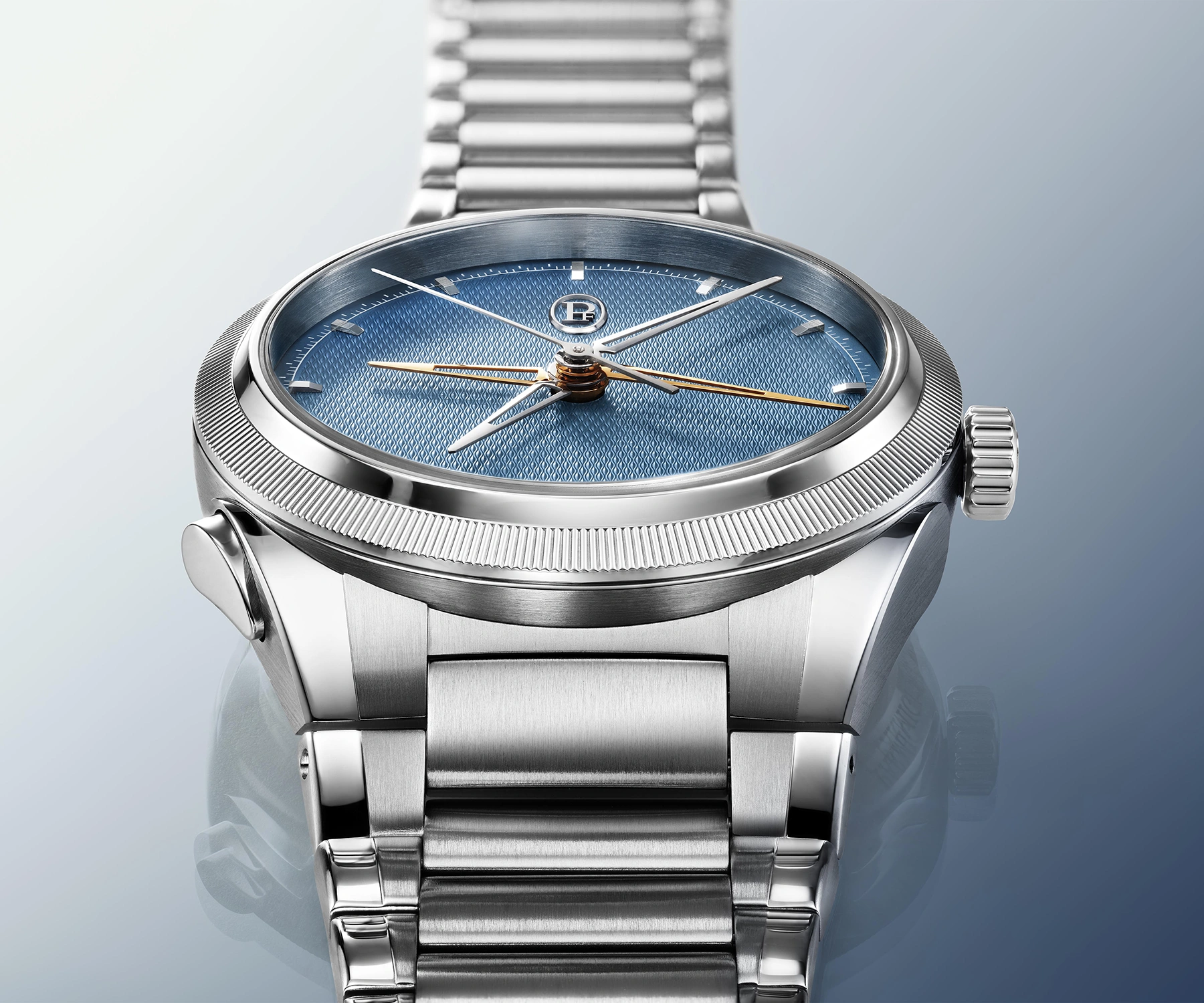
Parmigiani Fleurier Tonda PF Chronographe Mystérieux
At rest, the Parmigiani Fleurier Tonda PF Chronographe Mystérieux appears to be a three-hand dress watch. Nothing on the dial suggests the presence of a chronograph – there are no subdials, counters or visible clues to the mechanical complexity beneath. That’s precisely the point. As the world’s first hidden chronograph complication, it required an entirely new architecture to make such invisibility possible.
The 40mm timepiece is built around a single monopusher integrated into the caseband between 7 and 8 o’clock. The first press triggers an instantaneous flyback: three rhodium-plated chronograph hands deploy from the centre and position simultaneously at 12 o’clock before beginning their measurement across the full dial. Rose gold hour and minute hands for civil time appear simultaneously, running alongside the chronograph hands. The second press stops the measurement. The third is the most remarkable: The rhodium-plated hands align precisely with the rose gold civil time hands, the seconds hand resumes its natural motion, while the chronograph disappears entirely. The dial returns to what it was at rest.
Developed specifically for this watch, the calibre PF053 comprises 362 components and is built around a triple clutch architecture, one vertical and two horizontal, made necessary by the superimposition and transformation of hand functions across the display. It runs at 28,800 vibrations per hour, delivers a 60-hour power reserve and measures just 6.9mm in thickness. The finishing is consistent with the Swiss watchmaker’s standards, such as openworked bridges with satin-finishing and bevelled edges, and a rose gold oscillating weight with alternating sandblasted and polished surfaces.
Fitted with an integrated steel bracelet, the timepiece boasts a handcrafted grain d’Orge guilloché dial in Mineral Blue framed by the maison’s signature knurled platinum bezel. The result is unmistakably Parmigiani Fleurier – refined, balanced and quietly luxurious. Here, complexity is not removed, but mastered to the point of invisibility.
Related Insights
View All Insights-

- News
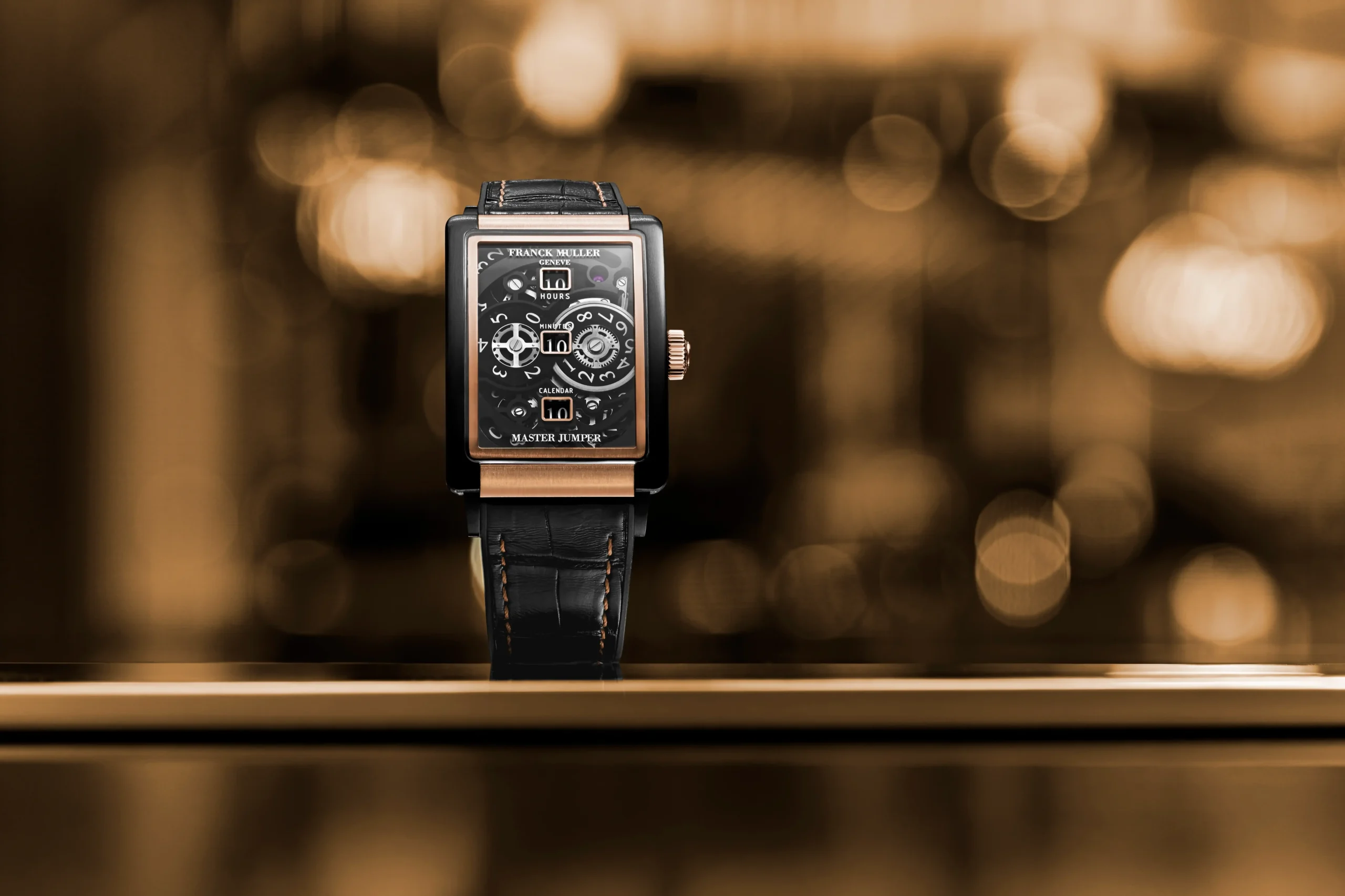
Franck Muller Celebrates The Art of Skeletonisation
22 Oct 2026
-

- News
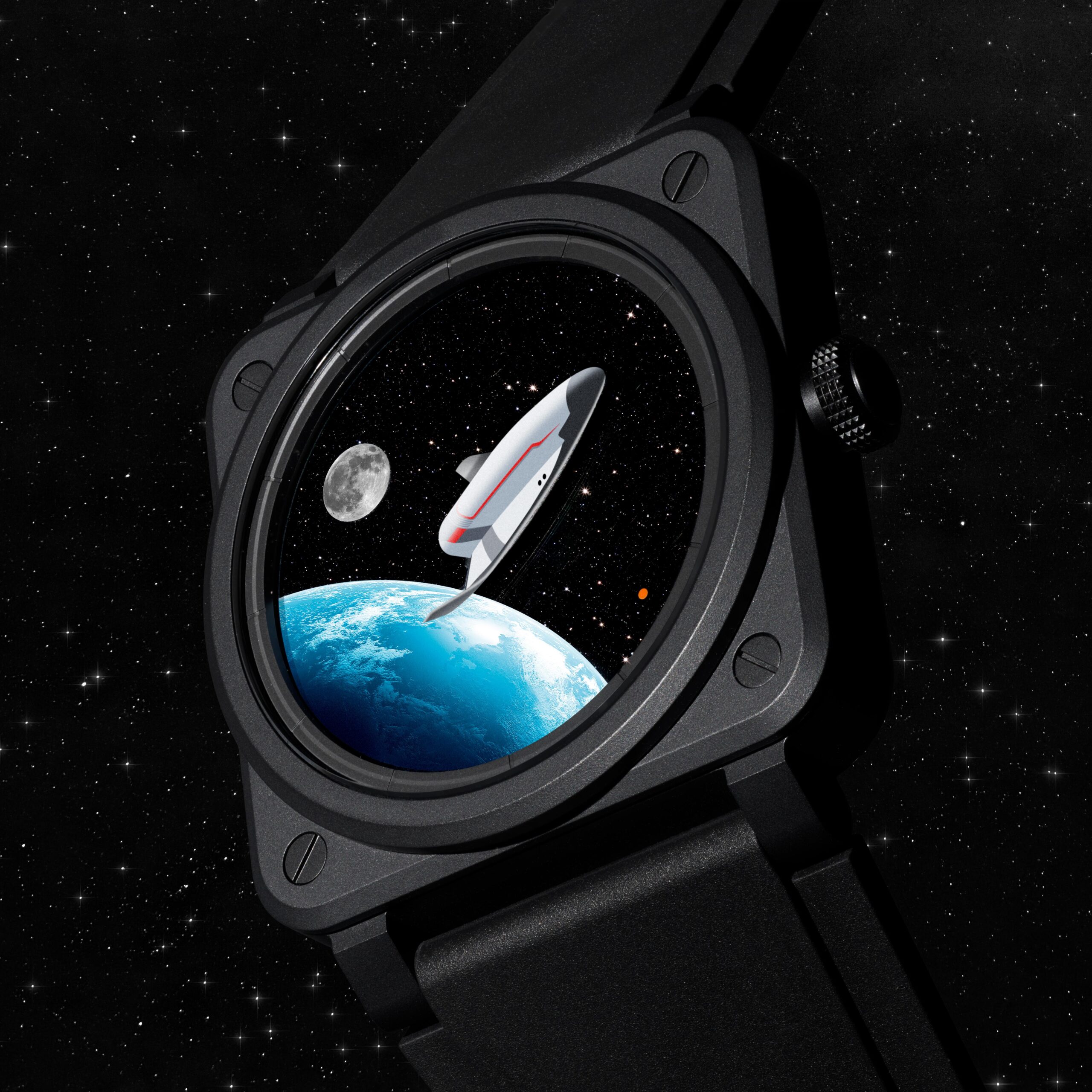
Bell & Ross BR-03 Space Mission
20 Oct 2026
-

- Watch Knowledge
Motoring-Inspired Watches That Carry the Adrenaline Beyond the Track
09 Oct 2026
-

- News
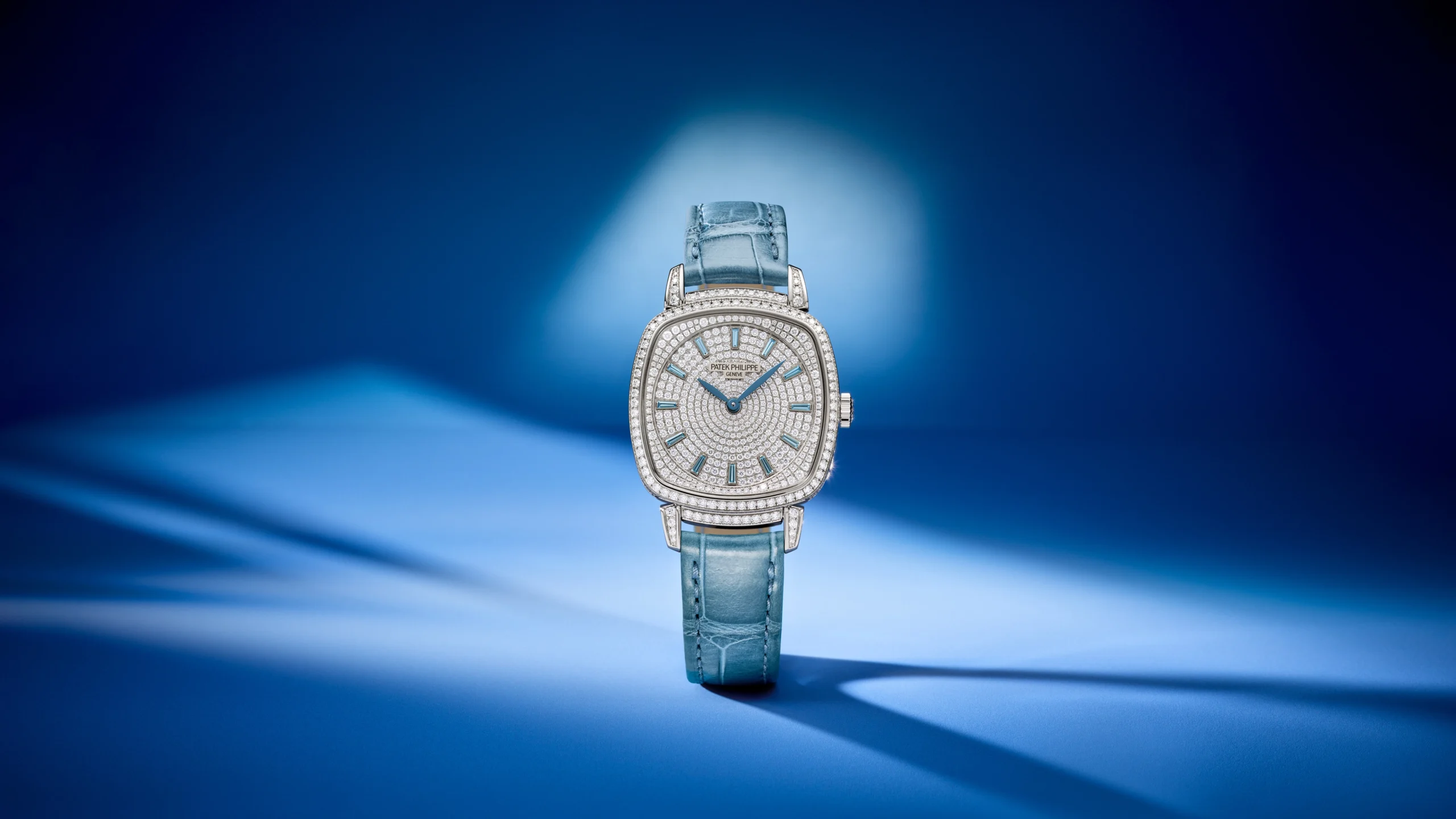
Patek Philippe’s Gondolo Ladies First Jewelry Watches Offer A New Expression Of Feminine Refinement
05 Oct 2026
-

- News
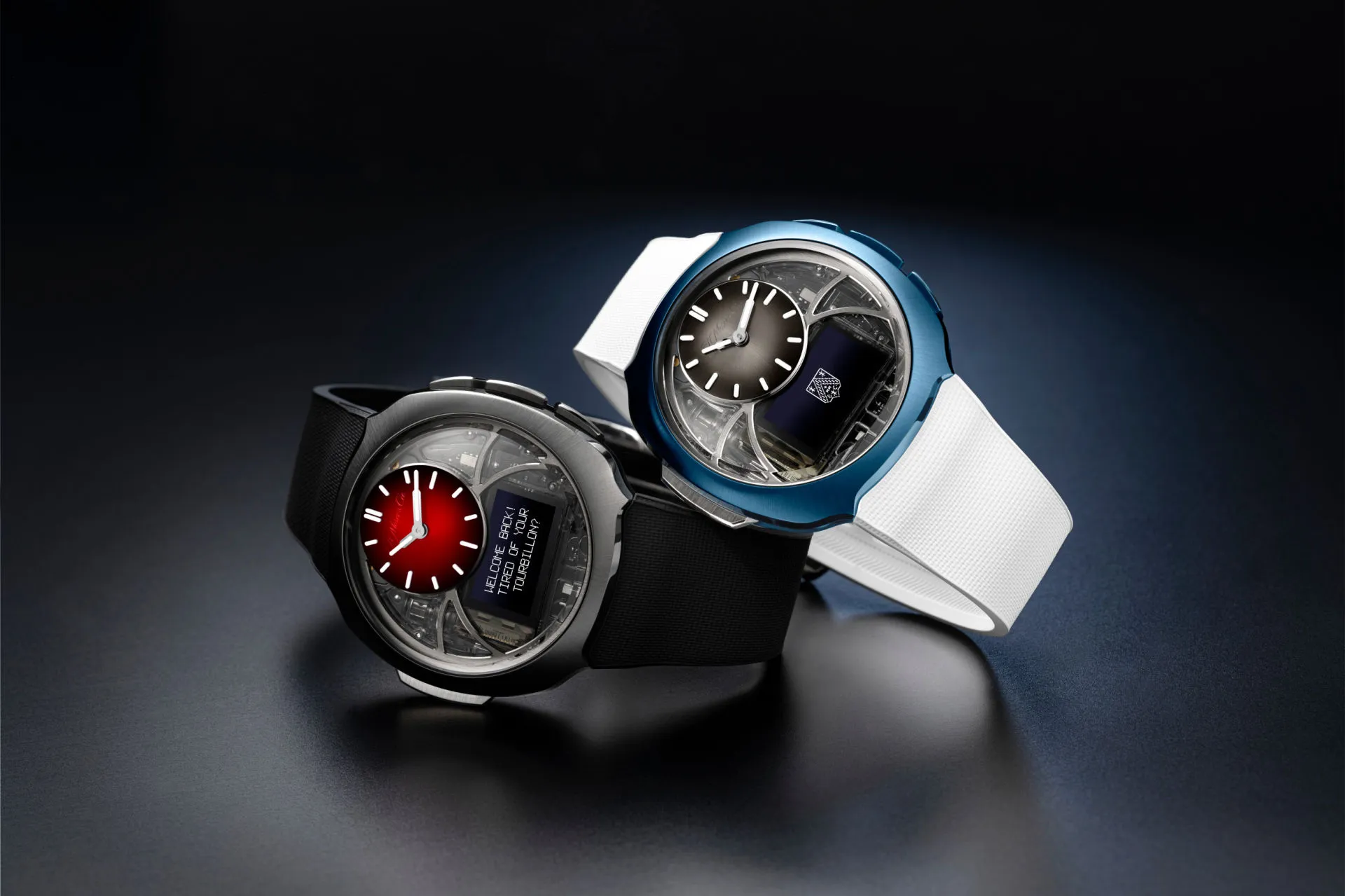
H. Moser & Cie. Off Grid: The Digital Watch For Watchmaking Enthusiasts
29 Sep 2026
-

- Brand Spotlight
Blancpain Six Masterpieces
18 Sep 2026